
Emergency Air Duct Cleaning Near Me: What Davie Homeowners Should Do First
If you can see mold at a supply register, smell sewage in the airstream, or you’re dealing with soot after a fire, treat it as an emergency and stop running the system. For heavy dust, a musty odor, or an animal in the ductwork, you have time to schedule a proper inspection rather than pay crisis pricing for routine work. What you do in the first hour matters more than who you call.
If you’d rather not sort through it yourself, call (833) 772-2601. We answer 24/7, and estimates are free.
What Actually Counts as a Duct Emergency in Davie?
Most calls that come in labeled “emergency air duct cleaning” aren’t emergencies at all. They’re urgent, uncomfortable, and worth fixing quickly, but nobody’s health or property is in immediate danger. Knowing the difference is what keeps a scary evening from turning into a crisis invoice.
Here’s the triage framework we use. Three situations are genuine emergencies:
- Sewage backup contamination. If wastewater has entered the ductwork, the system is distributing contaminants every time it runs. Shut it off and keep it off.
- Confirmed mold with the system actively running. Visible growth at a register or return, especially with a musty smell throughout the house, means spores are being pushed into living spaces. Stop the airflow.
- Post-fire soot. Smoke residue settles into duct interiors and keeps recirculating long after the fire is out. This one needs professional filtration equipment, not a shop vac.
Urgent but not an emergency: a sudden heavy dust surge from the vents, an animal that’s gotten into the ductwork, or a strong odor without any health symptoms. Those get scheduled promptly, but you don’t need to panic-dial anyone.
In Davie, the pattern we see most is a homeowner noticing musty air after a stretch of humid weather and assuming the worst. Sometimes it’s a duct problem. Sometimes it’s a drain pan or a filter that hasn’t been changed since spring. A proper inspection tells you which, and that’s worth more than a hurried guess.
What Should You Do (and Not Do) Before a Technician Arrives?
Your job before the technician pulls up is containment: stop the system from spreading the problem and keep your household out of the affected rooms. Your job is not to clean anything. Half the damage we’re called to undo started with a homeowner trying to help.
For mold at a register, turn the system off at the thermostat and leave it off. Don’t run the fan in “on” mode to see if it clears, and don’t spray anything into the vent. Sealing the register with plastic sheeting and tape limits migration into the room while you wait.
For sewage contamination, shut the system down and keep people and pets out of affected rooms. Don’t run water in nearby fixtures until you know where the backup originated.
For soot after a fire, shut the system off and avoid running any fans or portable units that move air around. That just redistributes fine residue onto surfaces you already cleaned.
For the urgent-but-not-emergency situations, a few practical steps go a long way:
- Replace the air filter. A clogged filter mimics duct problems and makes everything worse.
- Note when the symptom started and which rooms are affected. That detail helps the technician enormously.
- For animal intrusion, don’t reach into the duct. Secure the room, note where you heard movement, and wait.
- For odors, air the house out with open windows rather than running the system to “test” it.
The one habit that causes the most trouble: running the AC to blow the problem out. It never works, and it spreads contaminants through every room the ducts serve.
How Do You Vet an “Emergency” Duct Provider at Speed?
Ask three questions before you book anyone, and listen for whether the answers are specific. A qualified specialist answers them without hesitation. An opportunistic generalist gets vague or pushes you toward an immediate booking.
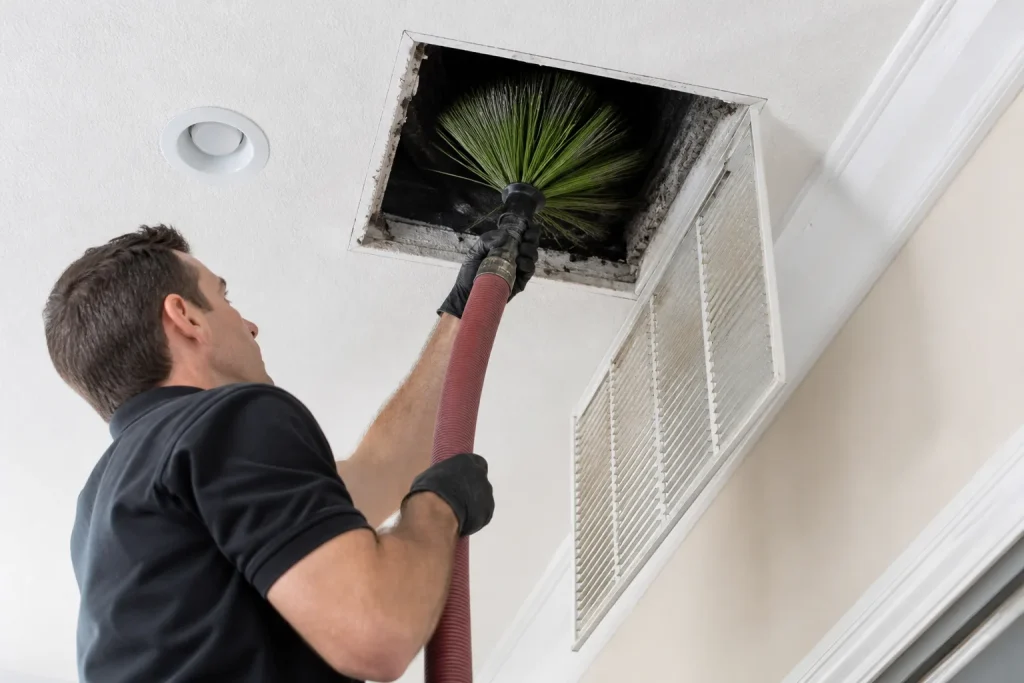
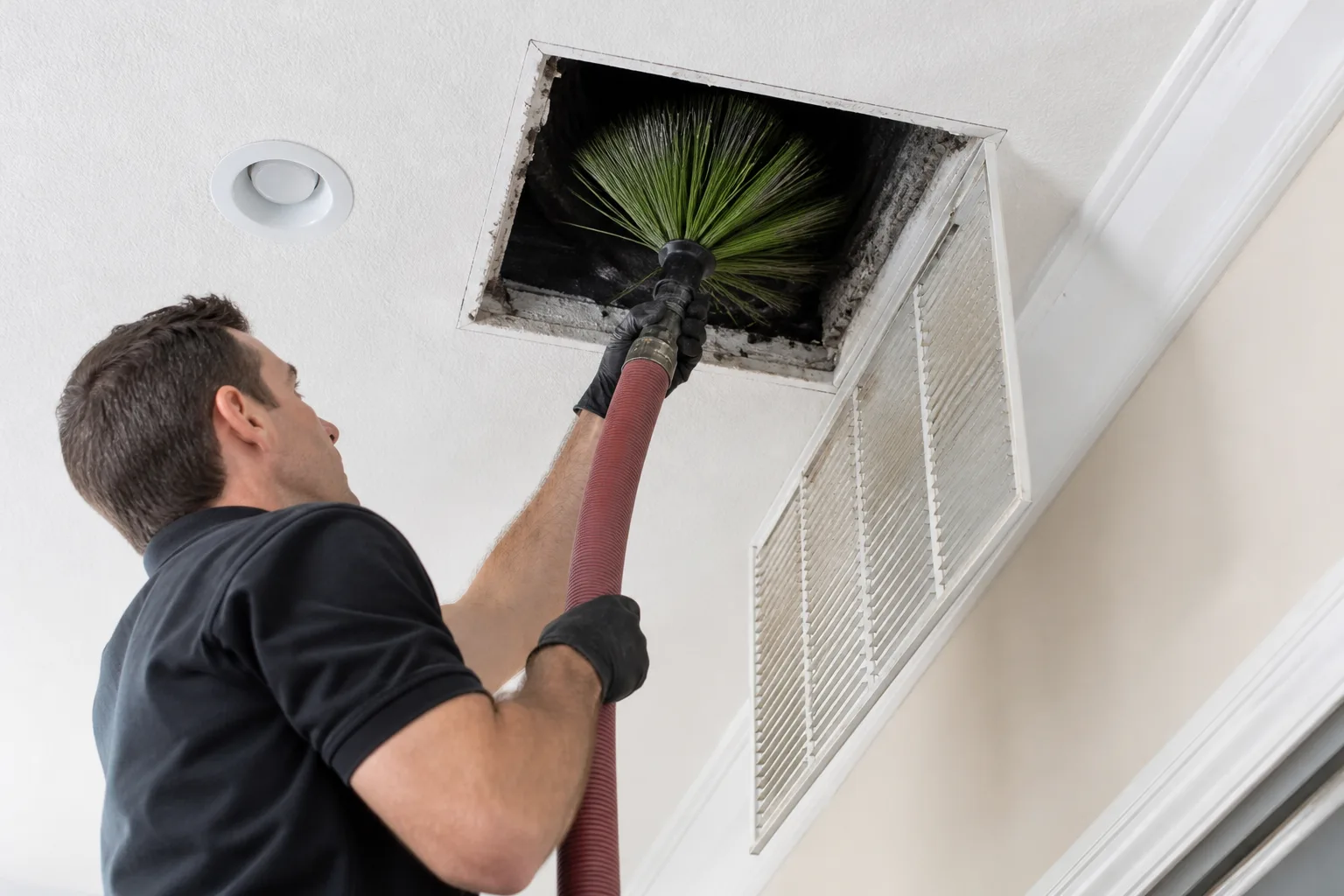
First: what equipment will you bring? Duct cleaning isn’t a vacuum-and-hose job. Professional-grade systems like Rotobrush and Nikro, paired with HEPA filtration such as Abatement Technologies units, capture dislodged debris before it re-enters your living space. If the answer is “a big shop vac,” that’s your cue to keep calling.
Second: can you repair the ductwork if you find damage? Cleaning a torn or disconnected duct just moves the problem around. A team that handles both cleaning and repair in one visit saves you a second contractor and a second wait.
Third: is the price per system or per vent? Per-vent pricing is how a reasonable quote becomes an unpleasant surprise once the technician is at your door. Ask for one flat price for the whole system, agreed in writing before work starts.
One more thing worth asking: do they take before-and-after photos of your own ducts? That’s how you know the work actually happened. If a provider won’t offer it, that tells you something.
We’ve watched enough homeowners get burned by coupon-driven “emergency” pricing to say this plainly: a specialist who shows up with real equipment and a written estimate is worth waiting a few hours for over someone who answers at 10pm with a suspiciously low number.
Why Post-Storm Duct Inspections in Davie Are Time-Sensitive
Storm damage doesn’t always announce itself with a hole in the roof. The more common scenario in Davie after heavy rain is moisture intrusion that gets into the duct system and sits there. Warm, humid air inside a duct run is exactly the environment mold needs, and it can start developing within days, well before you notice a smell.
Here’s what early moisture intrusion looks like before it becomes a mold problem:
- Damp or musty odor that’s strongest when the AC first kicks on
- Condensation or water staining around supply registers or return grilles
- Dust that clumps rather than drifts when it settles on vents
- Uneven airflow between rooms that wasn’t there before the storm
If you see any of those after a storm, get an inspection scheduled. That applies whether or not you see visible damage. A quick check now beats a full remediation later. If a technician finds a compromised run, the same visit can handle the repair, so a water problem doesn’t get a chance to become an air-quality problem.
What Should You Document for an Insurance Claim?
Documentation is what separates a smooth claim from a frustrating one, and it’s easiest to gather right when the problem is happening. Take photos and video before anyone cleans anything: wide shots of affected rooms, close-ups of visible damage, and shots of any water staining or moisture you can see. Save receipts for filters, temporary repairs, or hotel stays if the home became unsafe.
Keep a written timeline. Note when you first noticed the problem, when you turned the system off, and when the technician arrived. Photograph the before-and-after images a technician should provide, since those document the extent of the original damage.
On coverage: many homeowner policies in Florida cover sudden, accidental damage from a covered peril, like a burst pipe or storm-driven water intrusion. Long-term moisture problems, deferred maintenance, or gradual deterioration are commonly excluded. That’s why fast documentation matters. A problem you catch and fix quickly looks very different on paper than one that’s been developing for months. Check your own policy and ask your insurer directly, since coverage varies by policy and carrier.
When to Call a Pro
Call a pro immediately for sewage contamination, confirmed mold with the system running, or post-fire soot. For everything else, schedule an inspection promptly and skip the middle-of-the-night panic. We can also help with dryer vent cleaning, which is its own fire-safety issue and worth checking while someone’s already at the house.
Related services in Davie: air duct cleaning and Davie service coverage.
The Bottom Line
Most “duct emergencies” aren’t emergencies. Sewage contamination, confirmed mold with the system running, and post-fire soot are the three that need immediate action. Everything else is urgent but can wait for a scheduled visit. The single biggest mistake is running the system to “blow it out,” which spreads the problem into every room the ducts serve.
When you do call, ask three questions: what equipment will you bring, can you repair what you find, and is the price per system or per vent. The answers tell you everything.
If you’re in Davie and need help, Duct Cleaning Davie offers free estimates. Call (833) 772-2601. We answer 24/7, with fast dispatch from 7am to 7pm.
Frequently Asked Questions
Typical whole-system air duct cleaning in the Davie area runs in the low hundreds to several hundred dollars per system, depending on the size of the home and the condition of the ductwork. Repair work found during inspection is quoted separately. The written estimate sets the final price, so you know the number before any work begins.
Per-vent pricing and teaser coupons often grow once a technician is on site. That’s this industry’s bait-and-switch reputation at work. Ask for one flat price per system, agreed in writing, and ask for before-and-after photos of your own ducts so you can confirm the work was done.
Before-and-after photos of your own duct interiors are the clearest proof. A professional-grade setup with HEPA filtration capture equipment, like Rotobrush or Nikro systems paired with Abatement Technologies units, also means the process is verifiable rather than invisible. Ask any provider for photos before you book.
Most homes do fine with an inspection every few years, and cleaning when the inspection shows real buildup, visible debris, or a change in air quality. Homes with pets, recent renovation dust, or a history of moisture problems may need it more often. If you’re unsure, a free estimate will tell you where you actually stand.
Call (833) 772-2601 for an exact quote. Estimates are free.
Written by the team at Duct Cleaning Davie.
Need Air Duct Cleaning Help?
Call Duct Cleaning Davie - licensed & insured, here with fast help in Davie.
(833) 772-2601