
Last updated November 16, 2026
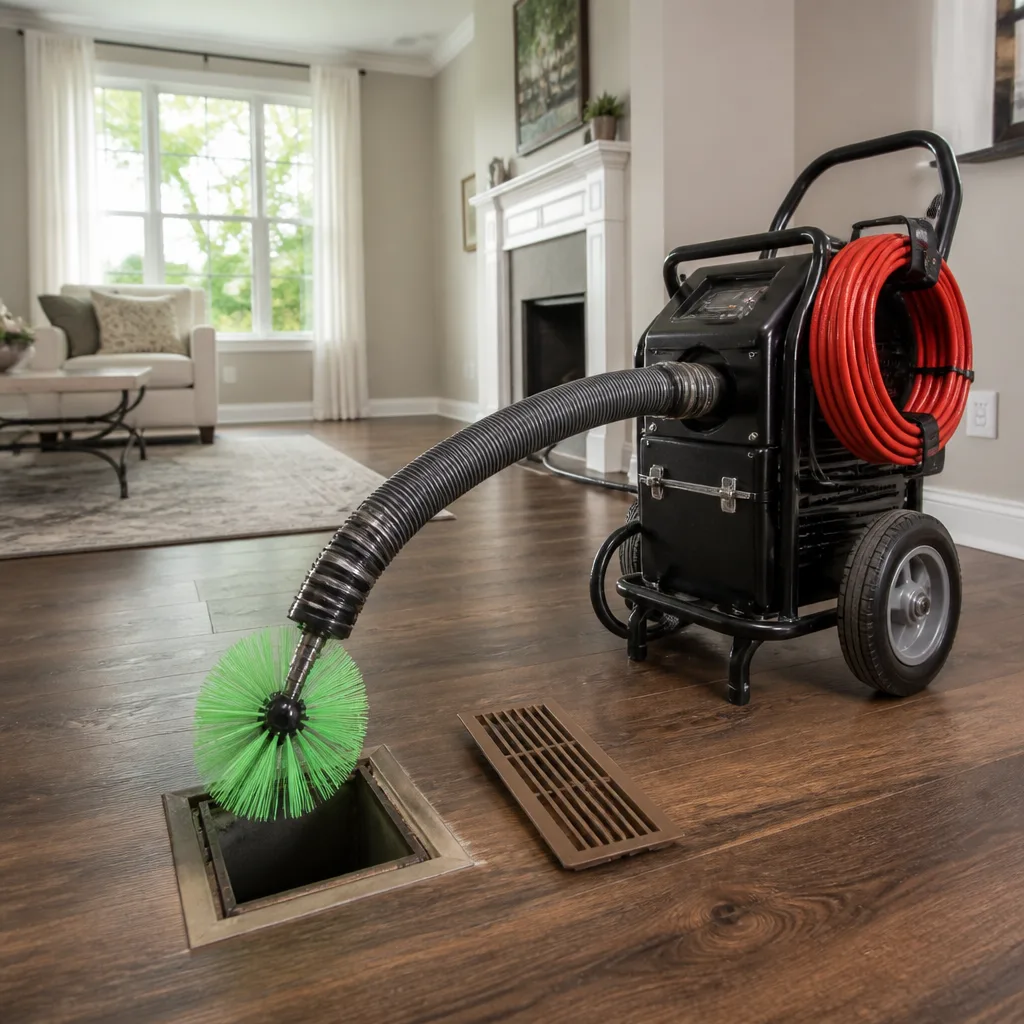 Whole-home duct cleaning
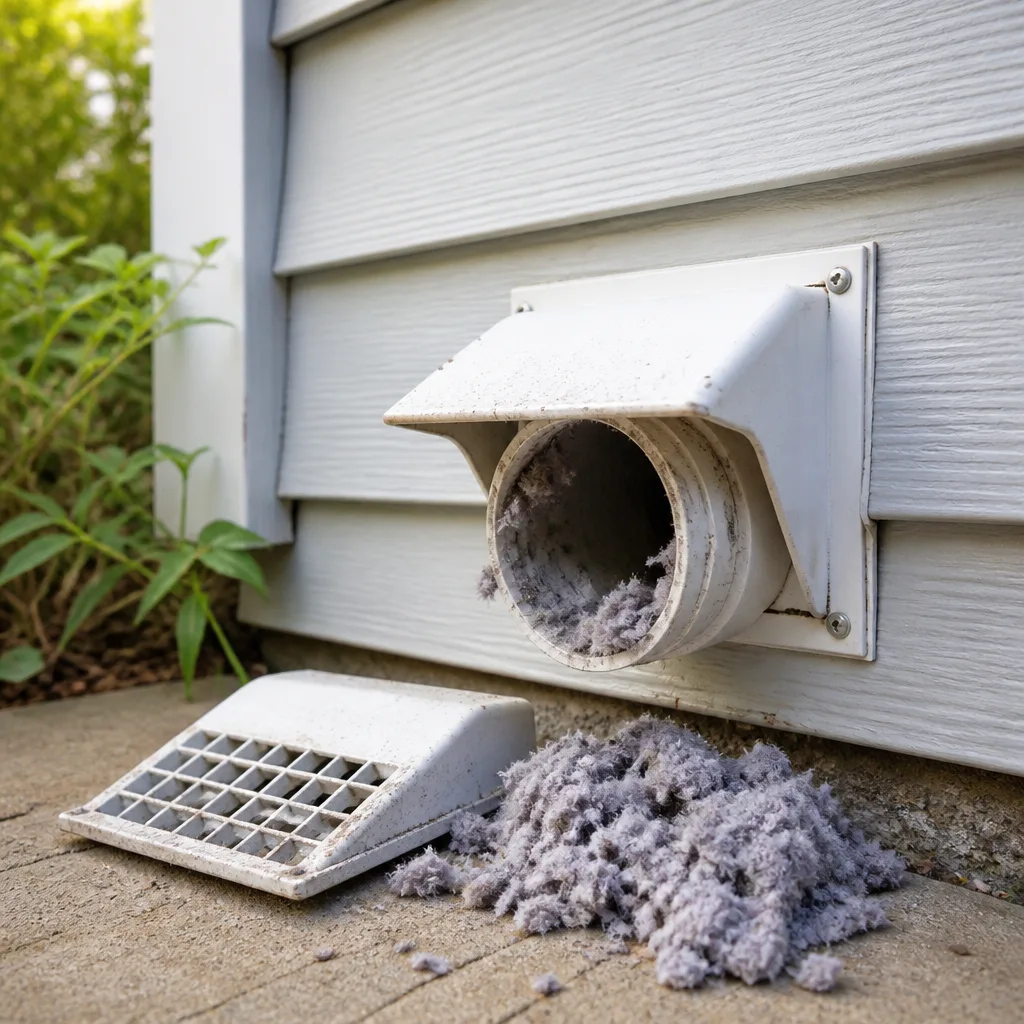 Dryer vent cleaning
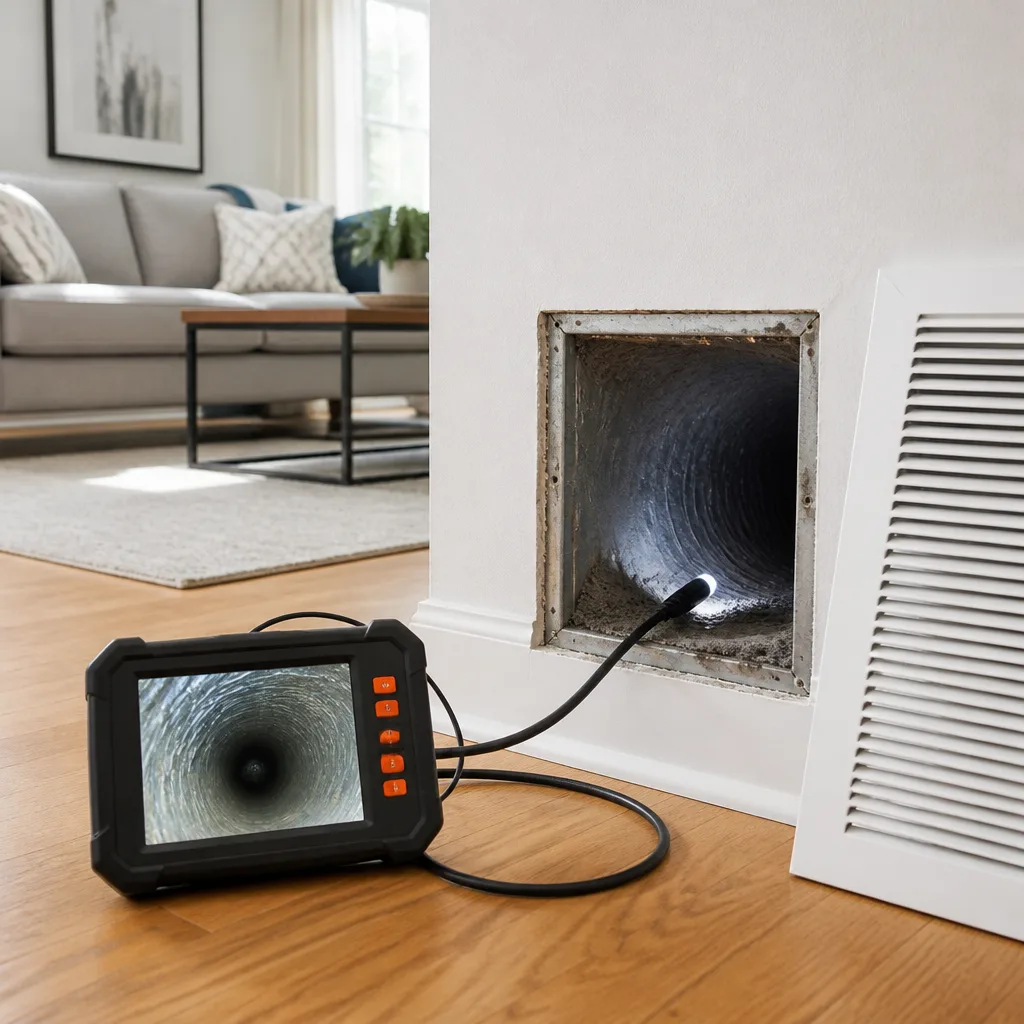 Camera inspection
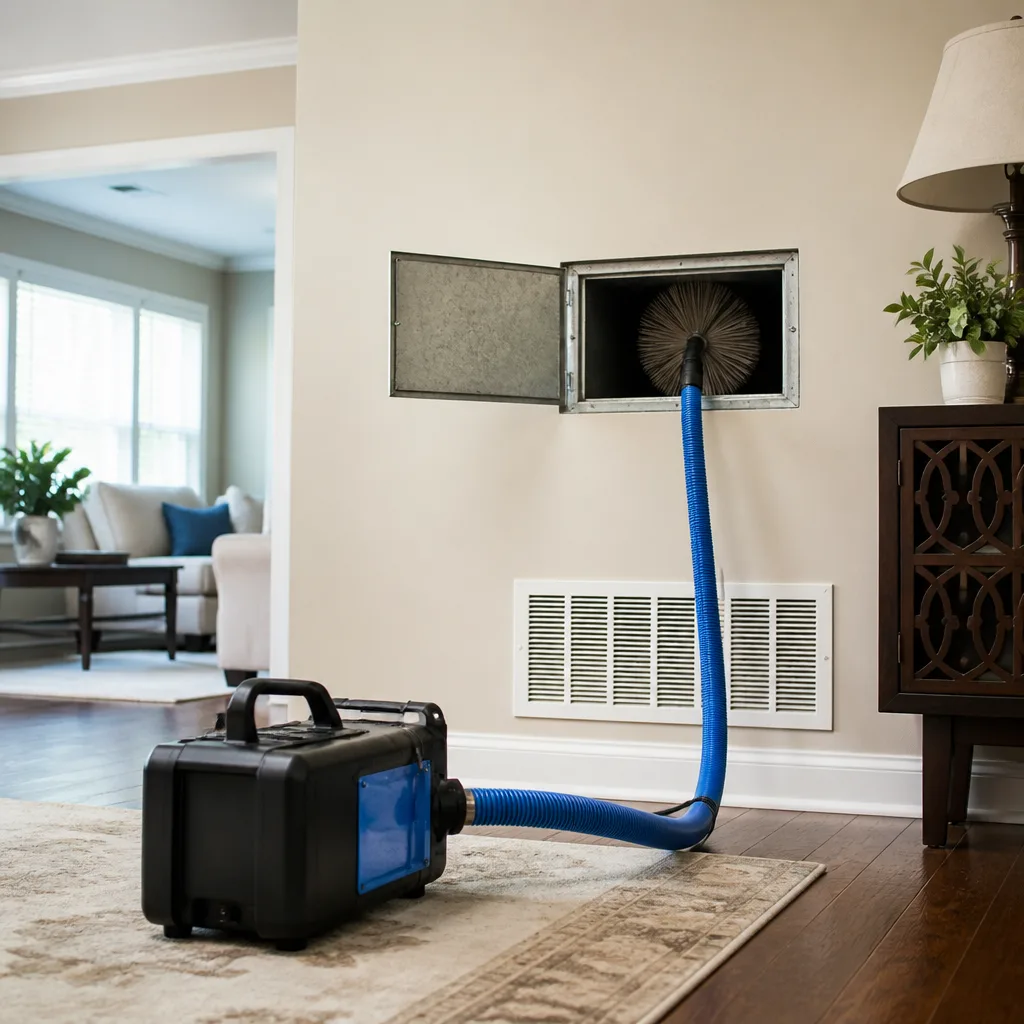 Sanitizing & deodorizing
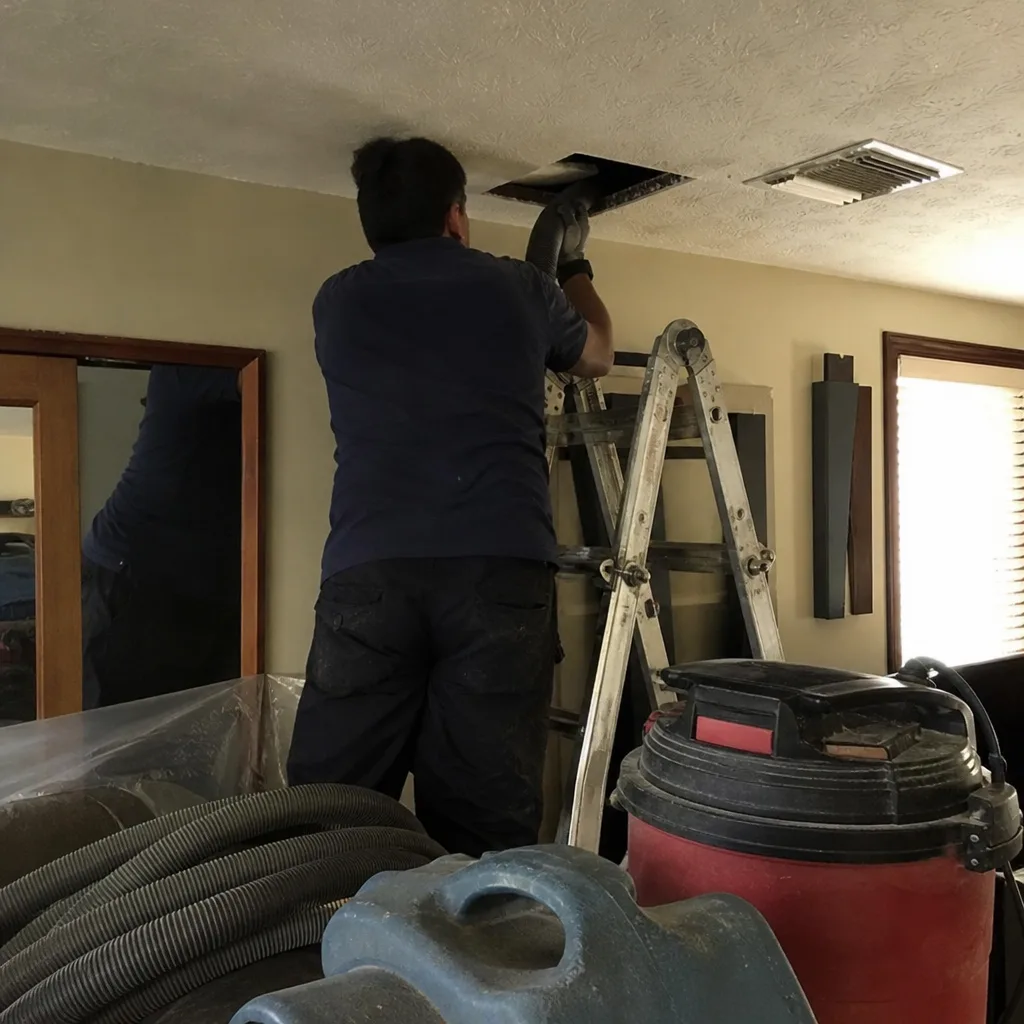
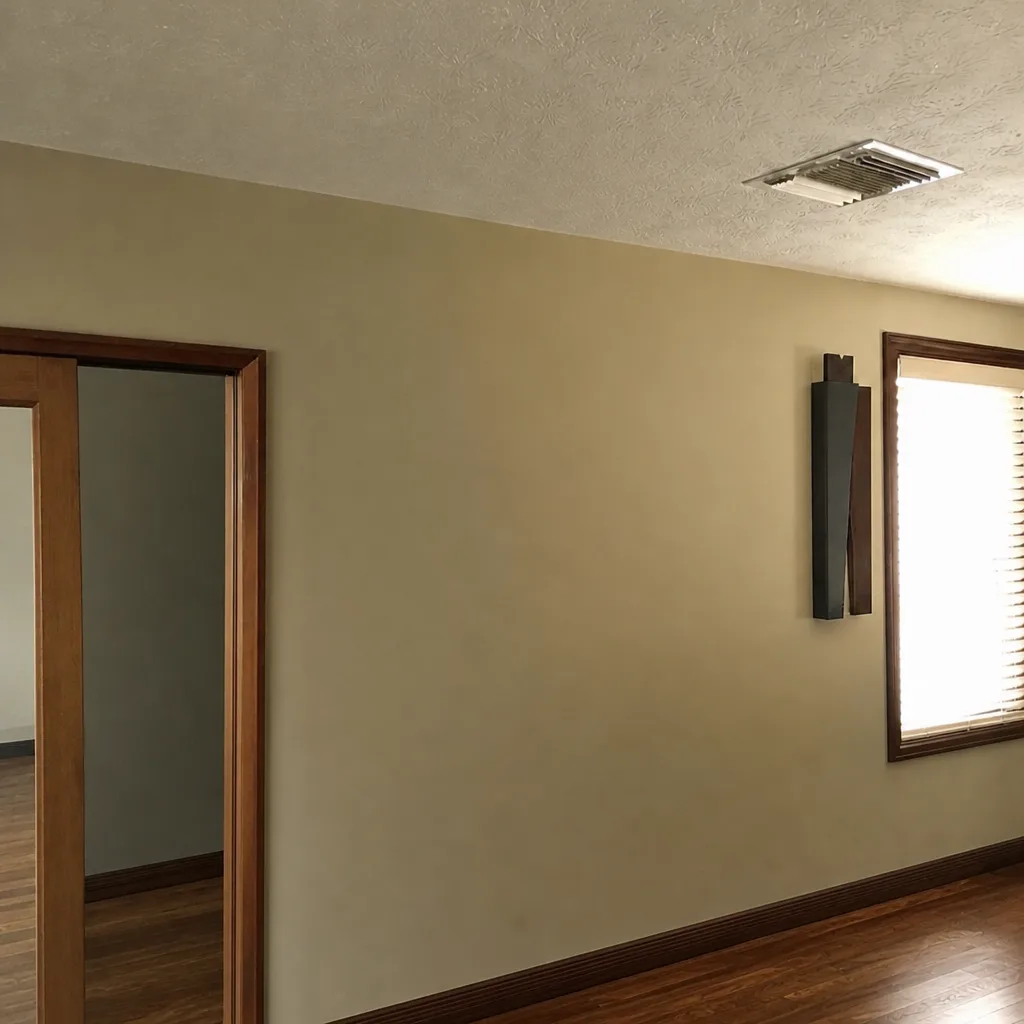
Whole-system duct and dryer vent check with before-and-after photos - you see exactly what came out of your vents
That "$99 whole-house special" is a bait ad - the real number appears once they are in your hallway, or the "clean" is a shop-vac at the register. We photograph the inside of your ducts before and after instead.
Air Duct Cleaning Maintenance Checklist for Davie Homeowners
Most homeowners treat duct maintenance as a filter problem. Swap the filter every few months, maybe vacuum the return grille, and the system is fine. That advice was written for dry climates. Davie averages over 130 days a year above 90°F, and the relative humidity here routinely sits above 70%. At those numbers, a neglected duct system stops acting like a dust collector and starts acting like a growth medium: condensation on cold surfaces, pollen pulled in all spring, and a slow buildup that narrows airflow across every register.
This guide gives you a checklist built for that reality – monthly, quarterly, and annual tasks tied to Davie’s actual humidity and pollen seasons, filter ratings that match your household, and the visual checks you can do yourself without a single tool. You’ll also learn how to log what you find so a technician can spot trends instead of guessing at a snapshot.
Quick Answer
A Davie duct maintenance checklist should include monthly filter checks, quarterly register and grille inspections, seasonal checks timed to the spring pollen peak and the humid summer stretch, and one professional cleaning roughly every three to five years depending on pets, construction age, and occupancy. Keep a written log of what you see at each register so you can catch gradual airflow loss before it becomes a repair.
Styles & brands we work with
- Whole-home duct cleaning
- Dryer vent cleaning
- Camera inspection
- Sanitizing & deodorizing
Table of Contents
- Why Davie’s Climate Ages Duct Systems Faster
- Monthly Tasks: The Filter and Return Grille Check
- Quarterly Tasks: Register and Duct Joint Inspections
- Annual Tasks: Seasonal Timing for South Florida
- Choosing the Right MERV Rating for Your Davie Home
- How to Log Duct Condition Over Time
- Red-Flag Conditions That Need a Service Call Now
- What a Professional Duct Cleaning Actually Involves
Why Davie’s Climate Ages Duct Systems Faster
South Florida is a hard place on ductwork, and the reason is condensation, not dust. When cool air moves through a supply duct in a home surrounded by 70%-plus humidity, any spot where the insulation or vapor barrier is compromised becomes a cold surface. Moisture collects there. Given enough time, that moisture supports biological growth and breaks down flex duct lining from the inside – damage you can’t see from the register.
Pollen adds a second layer to the problem. Davie sits close to the Everglades and the tree canopy that surrounds much of the town, so spring pollen loads are heavier than in more developed parts of Broward County. That pollen enters the return, coats the filter, and passes through to collect on the air handler’s evaporator coil if the filter is under-rated or overdue.
Older construction in parts of Davie makes this worse. Homes built before the 1990s often used duct insulation with a thinner vapor barrier and interior flex duct lining that holds moisture once it gets damp. Newer construction is tighter but not immune – a sealed home traps humidity inside if the system has any short-cycling issue.
None of this means every Davie home needs aggressive cleaning. It means the maintenance interval is shorter than the national advice suggests, and the tasks that matter most are the ones that catch moisture and airflow problems early.
What’s actually different here vs. a dry climate
- Filter replacement happens more often because the AC runs nearly year-round.
- Duct joint inspections matter more because condensation at a bad joint is a signal you can’t ignore.
- Pollen season adds an inspection in late spring, not just the fall.
- Mold-growth questions come up more often, and they require a technician’s eye, not a filter upgrade.
For the deeper background on what a full cleaning involves in this climate, see our Duct Cleaning Davie page.
Monthly Tasks: The Filter and Return Grille Check
Monthly tasks are quick. Fifteen minutes once a month catches the problems that cost the most if ignored.
- Check the filter. Pull it, hold it up to a light. If you can’t see light through it, replace it. In Davie’s climate, a 1-inch filter in a home with pets can load up in four to six weeks.
- Inspect the return grille. Look at the face of the grille and the frame around it. A light film of dust is normal. A visible coating of gray fuzz means air is bypassing the filter somewhere.
- Listen at each register. Put your hand in front of a supply register. Airflow should feel steady and even across all the vents in a room. Weak airflow in one room is the first sign of a collapsed duct or a closed damper.
- Look at the register fins. If you see dust streaks across the fins, the supply duct is delivering dust. If the fins are clean, the duct is likely fine.
- Note the date and observation in your log. A single check tells you nothing. Three months of checks tell you whether dust is increasing.
If you notice dust streaks forming on the ceiling around a supply register, stop and check the duct connection at that register in the next quarterly inspection. That’s the classic sign of a leaking boot or a loose flex connection.
Quarterly Tasks: Register and Duct Joint Inspections
Quarterly tasks require a flashlight and a willingness to poke your head into the attic or garage where the air handler sits. No tools needed – this is a visual walk-through.
At each supply and return register
- Remove the grille and look at the first 12 inches of duct behind it. Flex duct lining should be intact. Any tears or flaking means the duct is failing.
- Check the collar where the duct meets the register boot. A gap or a loose zip tie is a leak point.
- Look for staining or dark patches on the duct surface around the joint. That’s moisture, not just dust.
- Feel for cool air escaping around the boot into the room’s drywall cavity. You’ll know it – the air is noticeable.
At the air handler
- Look at the condensate drain line. It should be clear, no standing water in the pan or the drain trap.
- Open the access door and shine light on the evaporator coil. A light film is okay. A matted gray coating on the coil face means the system is starved of airflow and needs attention.
- Check the insulation blanket on the duct plenum. Any condensation dripping from it means the vapor barrier has failed.
- Look at the flex duct runs leaving the air handler. Sharp kinks, sagging runs, or disconnected sections are all service-call material.
Write down what you see at each checkpoint. A single inspection is a snapshot; four quarterly inspections are a trendline, and that trendline is what a technician needs to make a real recommendation.
If a flex duct run turns out to be torn or disconnected, we can handle the repair – our air duct cleaning visit often includes identifying and flagging repairable damage the same day.
Annual Tasks: Seasonal Timing for South Florida
Davie’s seasons are not the national four. They’re the spring pollen peak (roughly February through May), the humid stretch (June through October), and the cooler dry window (November through January) when humidity drops enough to make duct work comfortable.
Here’s how to schedule the annual tasks:
- Late winter (February): Replace the filter right before the pollen peak. Inspect the attic or garage duct runs while the weather is still mild. This is the easiest time for a full inspection.
- Spring (April-May): Check the filter again, mid-pollen. If you have pets or a family member with allergies, this is the second filter replacement of the year.
- Early summer (June): Check the condensate drain and pan. The AC is now running every day, and a clogged drain in July is a common cause of water damage.
- Late summer (August-September): Look at the accessible flex duct joints again. This is peak humidity, so moisture problems show up first here.
- Fall (October-November): Schedule the professional cleaning if it’s due. Cooler, drier weather is the natural window for duct work in Davie.
- Winter (December-January): A final filter change and a quick visual check. Not much happens in a Davie winter, which makes it ideal for catching up on repairs.
What “annual” really means in Davie
The “annual duct cleaning” advice you read online doesn’t quite fit here. In a dry climate, an annual inspection with professional cleaning every five years is reasonable. In Davie, the humidity and pollen load means a home with pets, allergy sufferers, or older construction often needs professional cleaning every three to five years. The annual task is the inspection, not the cleaning. The cleaning cadence follows the inspection findings.
For homes near the Everglades or under heavy tree canopy (parts of western Davie, the areas close to Tree Tops Park), pollen loads are higher and the interval tightens.
Choosing the Right MERV Rating for Your Davie Home
The MERV rating you choose has to balance filtration against airflow. A filter that’s too restrictive starves the air handler and makes every problem in the checklist worse, especially in a Davie home where the system runs nearly year-round.
Here’s a practical guide based on the household:
Standard household, no pets, no allergy concerns
MERV 8. This is the default for a reason: it catches the large particulate (pollen, dust mites, hair) without putting a meaningful load on the blower. If you’re currently using a cheap fiberglass filter, moving to MERV 8 is already a step up.
Pets in the home
MERV 11 to 13. Pet dander is finer than human hair and passes through a MERV 8 filter. Step up to MERV 11 first. Only go to MERV 13 if the system’s static pressure allows it – and ask a technician to check that before you commit. A MERV 13 filter in a system sized for MERV 8 airflow will cause short-cycling and higher energy bills.
Allergy sufferers, or a home in older construction
MERV 13 with a filter slot sized for it. Older Davie homes often have a 1-inch filter slot that limits how much filtration you can add. If the slot is 1 inch, one option is a media filter cabinet upgrade, which houses a deeper filter (4-inch or 5-inch) without restricting airflow. Honeywell and Aprilaire both make filter cabinets for this use; we supply and install both, and a deeper filter also lasts longer between changes, which matters in a climate where you’re replacing every 4-8 weeks on a 1-inch filter.
Anything higher than MERV 13
Ask first. MERV 16 filters are designed for specific system setups and can starve a residential blower if the duct system wasn’t sized for them.
What about filter upgrades with a MERV rating already on the filter?
Read the rating, not the marketing. “Hypoallergenic” and “hospital-grade” are not MERV ratings. The number on the package is what matters. And check the depth of your filter slot before buying; a 4-inch filter installed in a 1-inch slot doesn’t work, and a 1-inch filter installed in a 4-inch cabinet passes air around the edges.
If you’re unsure what your system can handle, ask during the next service visit. When we clean ducts in a Davie home, we include a filter-slot and airflow check.
How to Log Duct Condition Over Time
A log is the single most useful maintenance habit in this climate. It converts a pile of random observations into a trend a technician can act on.
You don’t need software. A notebook or a note on your phone works. What matters is the pattern of data:
- Date and register location for each check. “Living room supply, west wall” is specific enough.
- Filter change dates and MERV rating. If you change filter brands or ratings, note it – airflow results will shift.
- Airflow feel at each register on a scale of weak / moderate / strong. You’ll know your baseline after two checks.
- Dust appearance at each register – light, moderate, or heavy streaks.
- Any odd smell or moisture noted at a specific register. Note the date and weather if you can.
- Photos. A photo of a register every three months is worth more than a written note. Stains, dust streaks, and grille color changes show up in photos faster than they show up in words.
Bring the log to the service appointment. A technician who can see that “living room airflow dropped in June and came back in October” will diagnose a seasonal humidity problem instead of guessing. That’s the difference between a snapshot and a diagnosis.
We’ve seen the difference log-keeping makes on repeat visits. Homes with logs get faster, more accurate recommendations than homes without them.
Red-Flag Conditions That Need a Service Call Now
Most of this checklist is homeowner territory. Some things are not. These conditions should convert a routine check into a service call the same day.
- Visible mold on a duct surface or register boot. Cleaning alone may not be enough; biological growth in a duct system needs a technician to assess the extent before any cleaning happens.
- Standing water in the air handler pan or a soaked insulation blanket. This is an active moisture problem, and continuing to run the system spreads the problem.
- A disconnected or visibly torn flex duct. The system is pulling air from the attic or crawl space instead of the return. That air is unfiltered and dusty.
- A strong musty or “dirty sock” smell from any register. Odor is one of the most reliable signals of biological growth or contamination in a duct system.
- Airflow at every register that dropped noticeably within a few weeks. A collapsed duct or a heavily fouled evaporator coil can both do this; it needs a technician’s diagnosis.
- Visible dust storms from a register when the system kicks on. The duct is heavily fouled, or a joint has failed. Either way, it needs professional attention.
- Any sign of pest activity (rodent droppings, nesting material, gnawed flex duct). This needs a specialist’s assessment, not a homeowner vacuum.
For a dryer duct, the red flag is lint accumulation visible around the exterior vent or a dryer that takes longer than one cycle to dry a load. That’s a fire-risk condition, not just an efficiency one – our dryer vent cleaning service addresses it as its own safety job. For everything else on this list, call us for an assessment before you run the system again.
What a Professional Duct Cleaning Actually Involves
If you’ve never watched a proper duct cleaning, the process looks different from what you might expect. Consumer-grade vacuums don’t move enough air to clean a residential duct system; they just stir dust. Professional-grade equipment does.
Here’s what a real cleaning involves:
- Inspection first. The technician opens the air handler, inspects the evaporator coil, and looks for duct damage or disconnected sections before any cleaning starts. Damage discovered at this stage is why we can offer air duct repair as part of the same visit.
- Negative pressure setup. A high-powered vacuum is connected at the main trunk. Air flows toward the vacuum, so any dust dislodged during cleaning is captured before it enters living spaces. We use Abatement Technologies air filtration equipment for this, the same category of equipment used in commercial duct work.
- Mechanical agitation. With the vacuum running, the technician uses a rotary brush or air whip to dislodge contamination from the duct walls. Rotobrush and Nikro are the two systems we use for this – not consumer equipment. The agitation matters because a vacuum alone can’t lift dust off a duct wall.
- Register-by-register cleaning. Each supply and return is cleaned individually, with the technician checking airflow from each as the work progresses.
- Post-cleaning inspection and reporting. The technician takes photos before and after so you can see the difference, then checks the evaporator coil, filter, and any accessible joints again. Any needed repairs are flagged here, still in the same visit.
- Optional IAQ upgrade. If the inspection shows a persistent dust or humidity problem that cleaning alone won’t solve, we can install a Honeywell or Aprilaire filtration or humidity-control product as part of the service – the brands we install regularly in Davie homes. Guardsman products are also available if the filtration setup calls for it.
The whole appointment runs a few hours for a typical Davie home. The exact time depends on square footage, number of registers, and how much repair work turns up.
Our technicians have up to 8 years of experience, and the team focuses exclusively on duct and vent work rather than the broader HVAC trade. That narrow focus is why the same team can clean a duct system and repair it when the cleaning turns up damage.
Common Mistakes to Avoid
- Using a shop vac to “clean” the ducts. A shop vac doesn’t have the airflow to lift contamination off a duct wall. It does stir dust into the room, which is worse than leaving it in place.
- Upgrading to a MERV 13 filter and assuming it fixes airflow problems. A filter that’s too restrictive starves the air handler. If airflow was already weak, a high-MERV filter makes it worse.
- Ignoring the attic or garage duct runs because they’re not visible. In a Davie home, the majority of the duct damage happens in the unconditioned space. The register looks fine; the flex duct 6 feet up looks torn.
- Skipping the condensate drain check in summer. The AC runs all day in June, and a drain that clogged in May puts water into the closet or attic. A five-minute check prevents most of these.
- Treating duct cleaning as a “one and done” job. Duct systems in this climate need a professional inspection every few years. Cleaning without a follow-up inspection just restarts the clock without catching the real problems.
- Hiring on price alone without checking equipment and process. A coupon-priced cleaning with consumer equipment doesn’t clean the system. Ask what equipment and what process will be used before booking.
- Not writing anything down. Without a log, every inspection is a guess. A trend over six months tells a technician more than any single visit.
See the difference
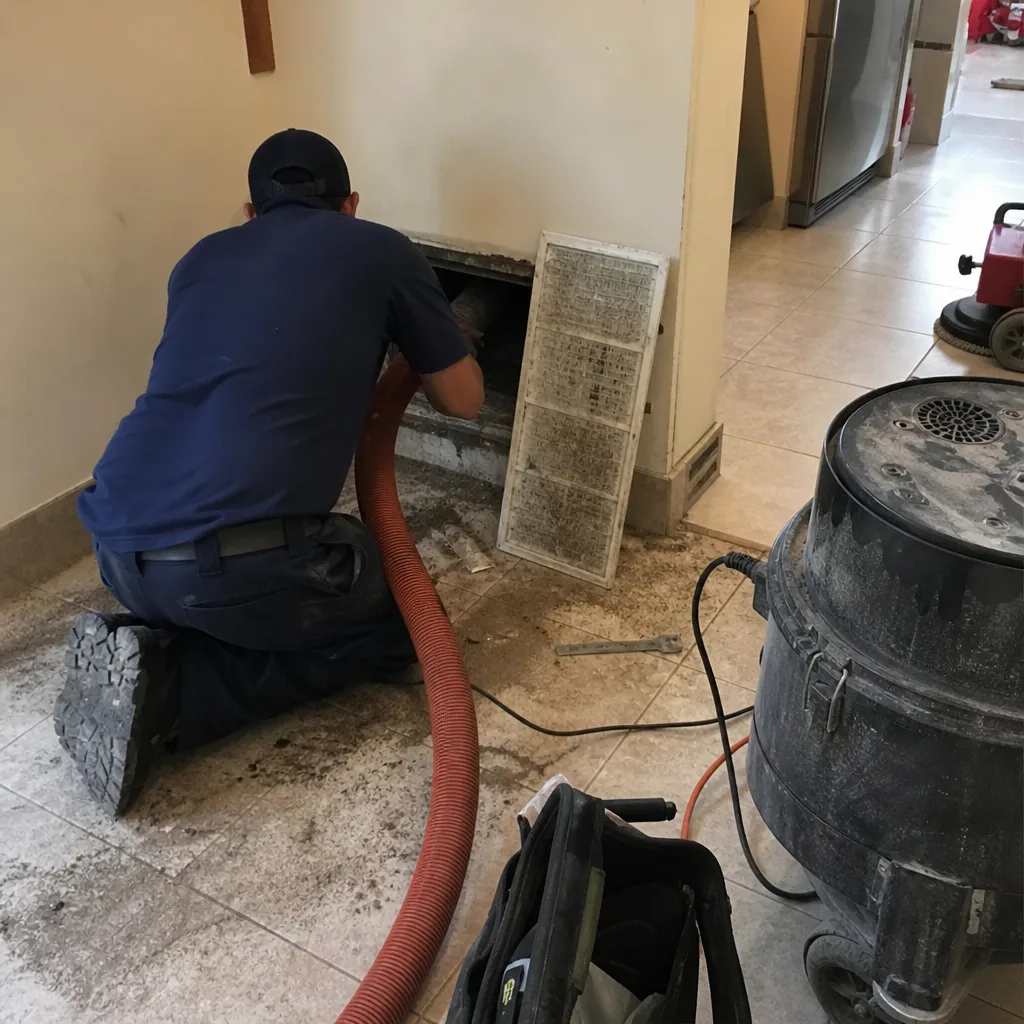 Before
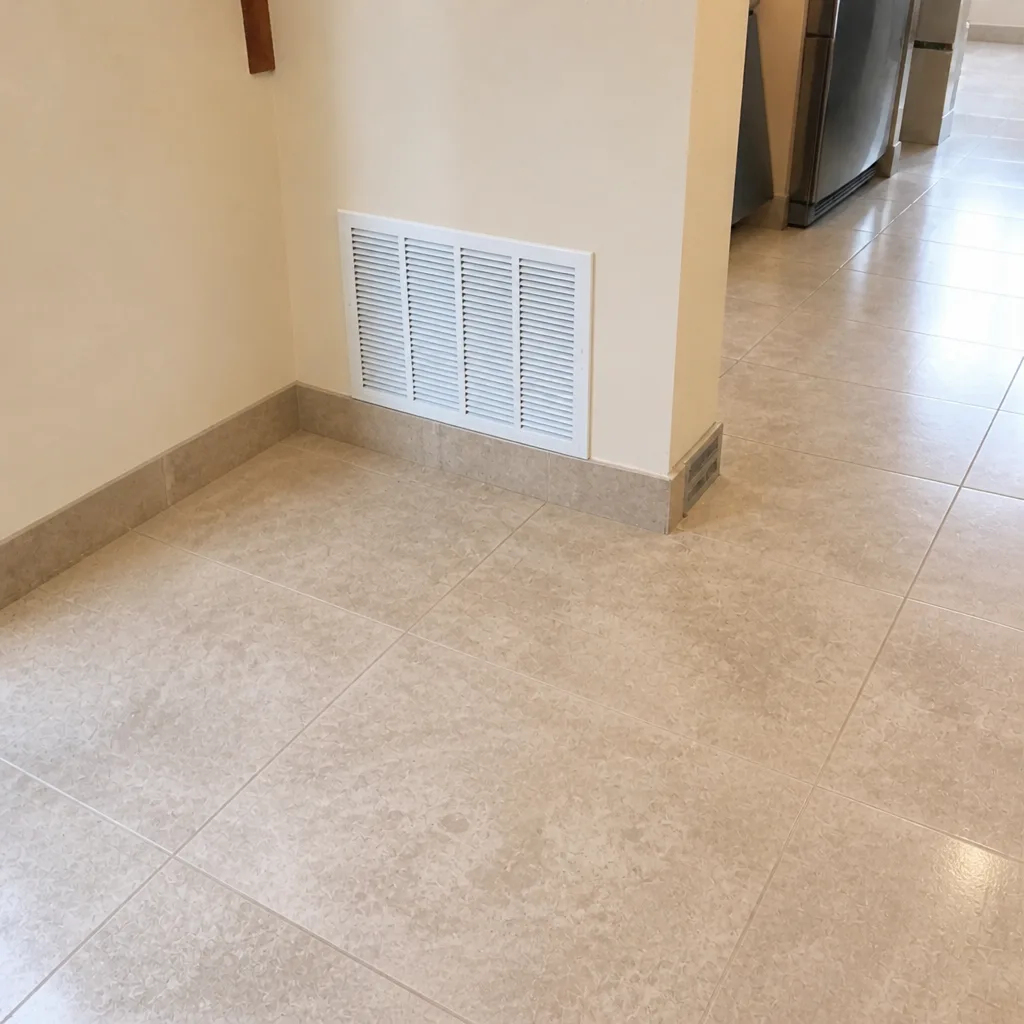 After
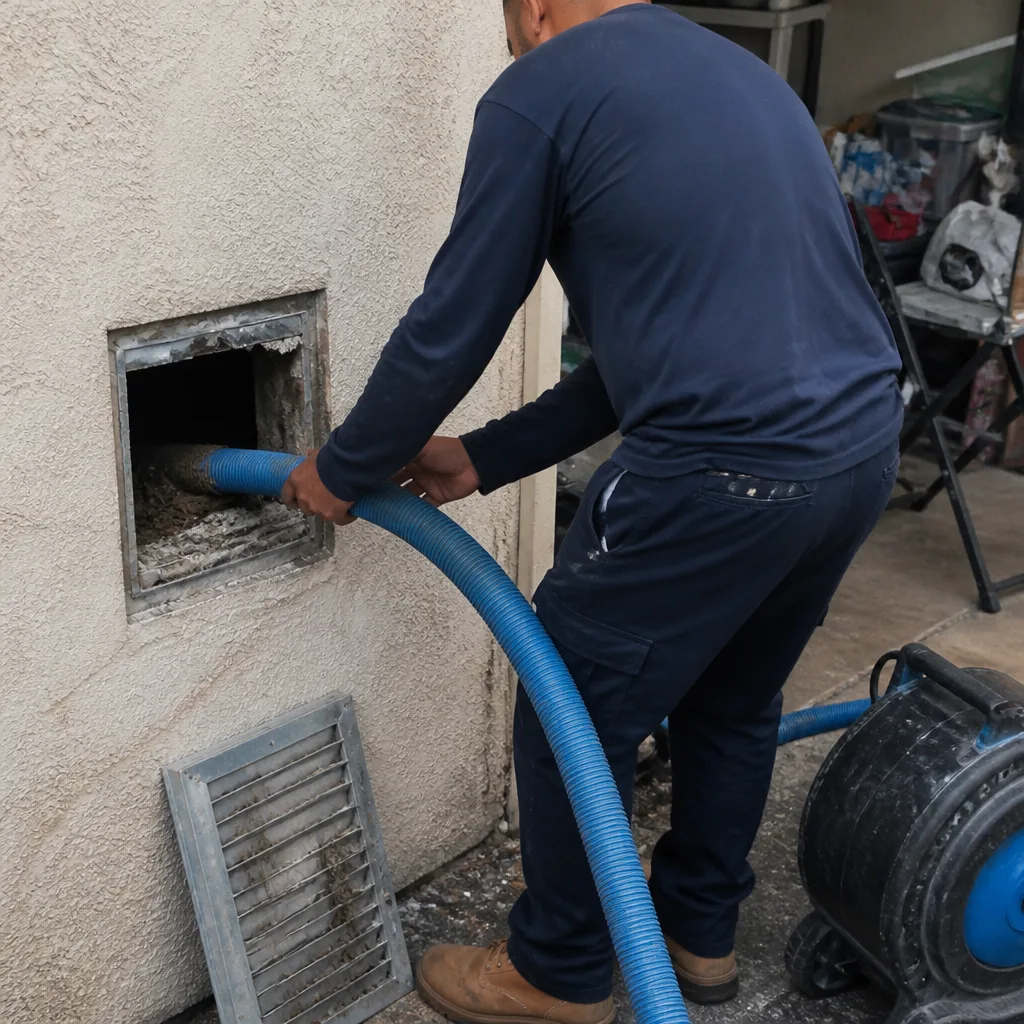 Before
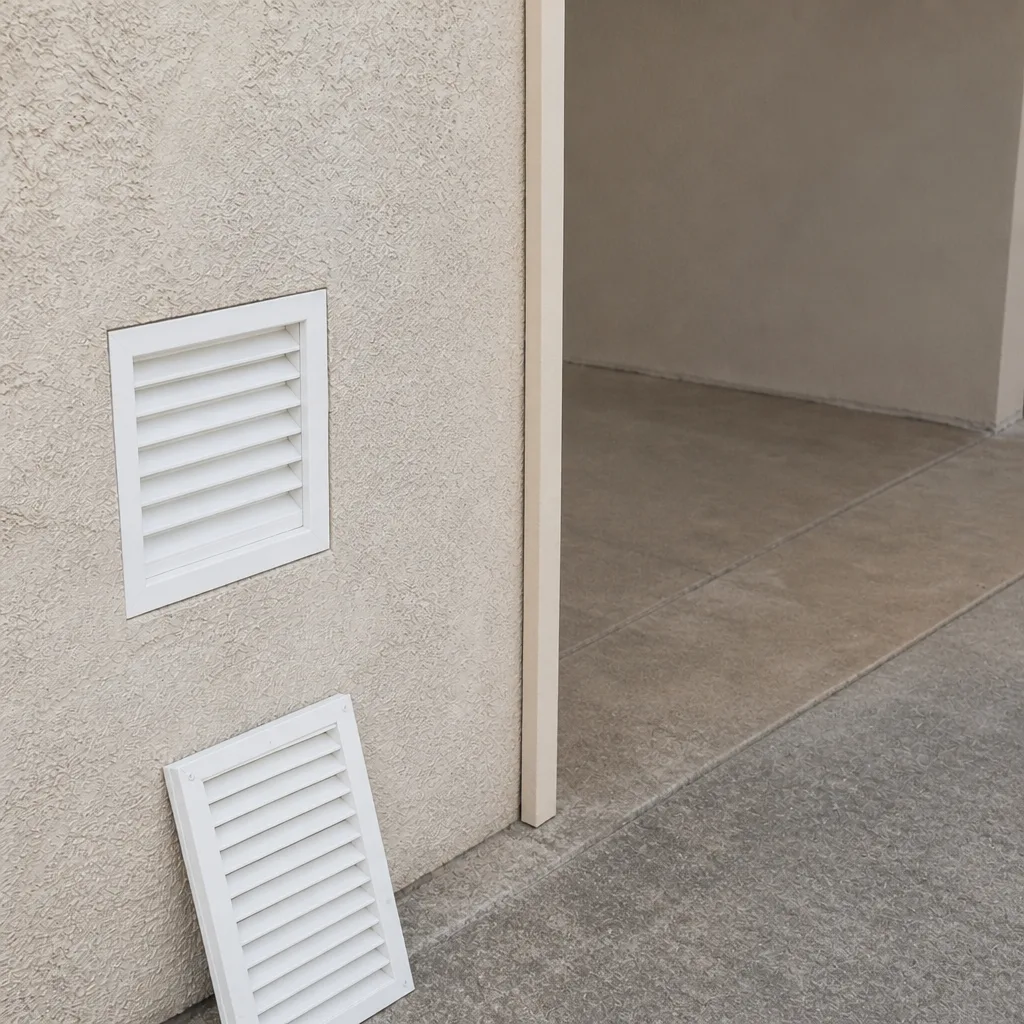 After
 Before
 After
When to Call a Professional
Call us when the checklist turns up a red flag: visible mold on a duct surface, a musty smell from any register, a torn or disconnected flex duct, standing water or soaked insulation at the air handler, or airflow that dropped across the whole house in a few weeks. Also call if your last professional cleaning was more than five years ago and you’ve never had a duct inspection, or if you’ve moved into a Davie home and don’t know the duct system’s history.
Duct Cleaning Davie offers free estimates in Davie. Our team uses professional-grade equipment (Rotobrush, Nikro, Abatement Technologies) and handles cleaning, repair, and IAQ upgrades in one visit, including Davie-area homes. Call (833) 772-2601. We answer 24/7. Fast dispatch from 7am to 7pm, Sunday through Friday.
Frequently Asked Questions
In Davie’s humidity, we generally recommend a professional cleaning every three to five years for a home with pets or allergy sufferers, and every five years for a typical household without those factors. Annual inspections between cleanings catch problems early, which is why the checklist above matters more than the cleaning interval itself.
Yes. Relative humidity above 70% for much of the year means any duct insulation or joint with a broken vapor barrier becomes a condensation surface, which supports biological growth and degrades flex duct lining. Humidity is the main reason Davie duct systems need inspection more often than the national “every five years” guideline. Call (833) 772-2601 for an assessment if you notice a musty smell.
MERV 11 is the practical starting point for a home with pets in this climate, and MERV 13 works if your system’s static pressure allows it. Ask a technician to check airflow before committing to MERV 13, because some residential systems sized for MERV 8 will short-cycle on a tighter filter. Call (833) 772-2601 for a filter-slot and airflow check.
You can do the visual inspections and filter changes on this checklist yourself. Full duct cleaning requires professional equipment; a shop vac doesn’t have the airflow to lift contamination off duct walls, and it dislodges dust into living spaces. Call (833) 772-2601 for a professional estimate before attempting anything beyond the checklist.
Musty odors from registers, visible dust streaks at multiple supply registers, noticeable airflow loss across several rooms, a dust cloud at system startup, and any visible mold or moisture at a duct joint are all immediate signs. Any one of them warrants a service call, not just a filter change. Call (833) 772-2601 and describe what you’re seeing.
Clean ducts reduce airborne dust and pollen, which can help allergy symptoms, but duct cleaning isn’t a cure and shouldn’t be presented as one. In a home with allergy sufferers, the bigger wins are usually a properly rated MERV filter, a sealed duct system, and a post-cleaning inspection. Call (833) 772-2601 to schedule a duct assessment and filter check.
Cleaning removes accumulated dust and biological growth from inside the duct system; repair fixes structural problems – torn flex duct, disconnected joints, collapsed runs – that cleaning alone cannot address. In our experience, cleaning often turns up repair needs that a homeowner couldn’t see from the register. Call (833) 772-2601 to schedule an appointment and we can address both in one visit.
A dryer vent is a fire-risk component, not just an airflow issue – lint accumulation at the exterior vent or around the dryer exhaust is the kind of condition that needs professional equipment to clear safely. We offer dryer vent cleaning as its own service, not as an upsell on a duct cleaning. Call (833) 772-2601 to book it.
The Bottom Line
Davie’s humidity and pollen load mean duct maintenance here runs on a tighter schedule than in a dry climate. The checklist that actually works: filter check monthly, register and joint inspections quarterly, seasonal timing built around the spring pollen peak and humid stretch, MERV ratings matched to your household, and a written log so a technician can spot trends. Red flags like mold, musty smells, disconnected ducts, or moisture at the air handler need a professional immediately. Everything else is the maintenance work that lets you catch a small problem before it becomes a duct repair, and in this climate, that’s the whole game.
Written by the team at Duct Cleaning Davie.