
Last updated November 16, 2026
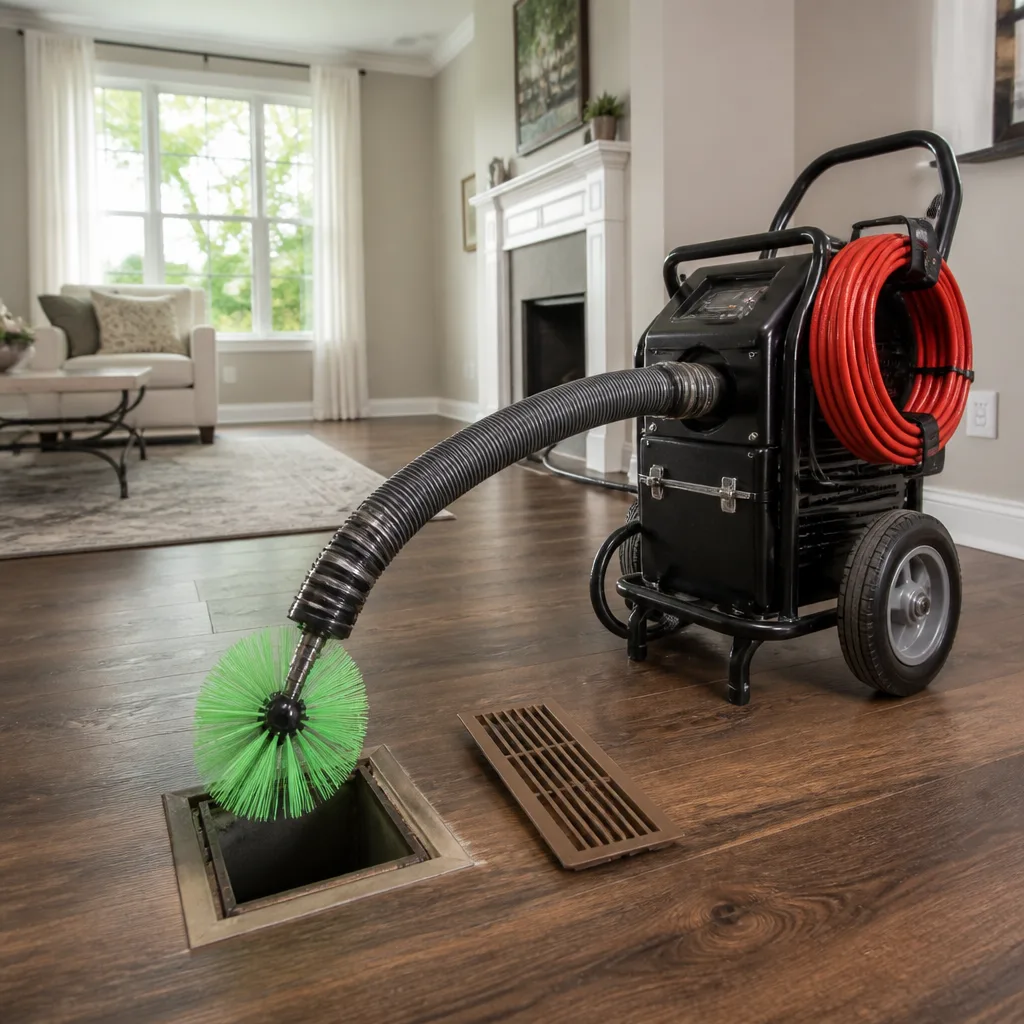 Whole-home duct cleaning
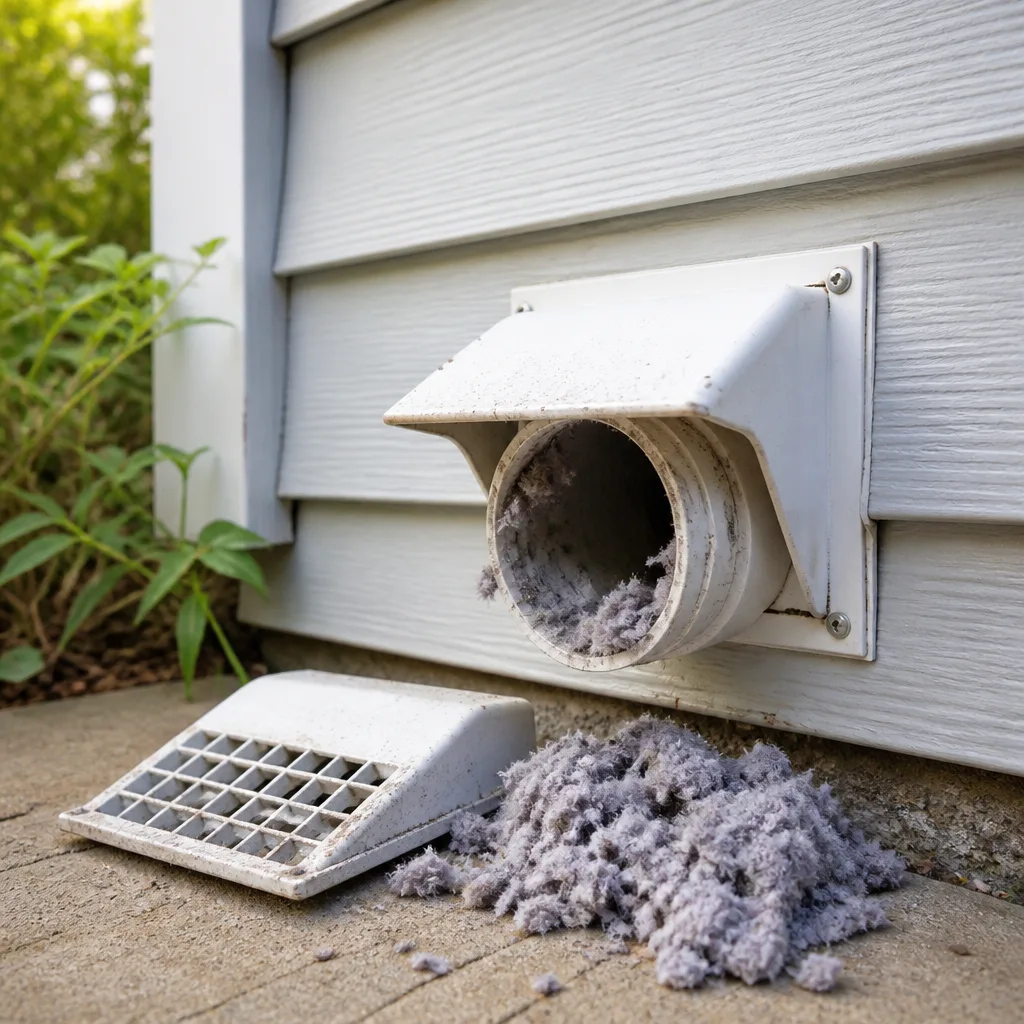 Dryer vent cleaning
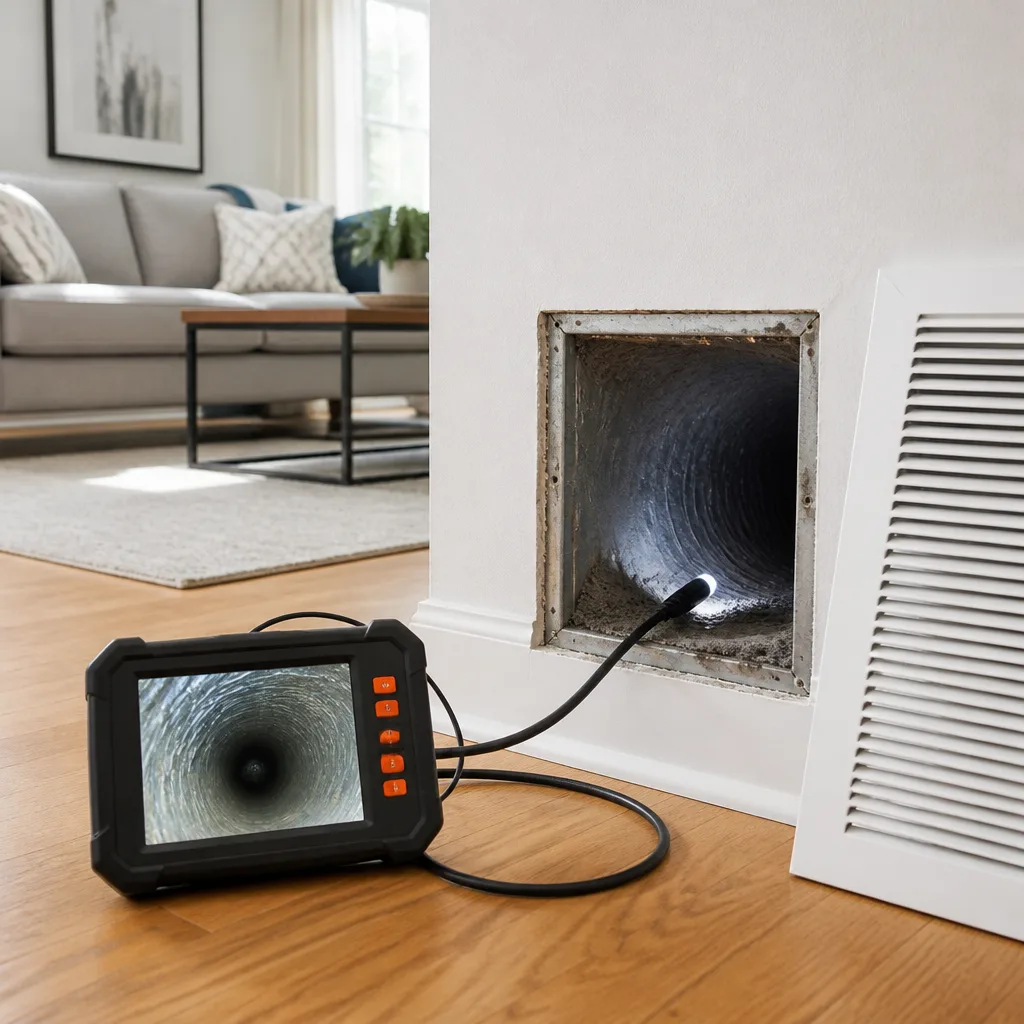 Camera inspection
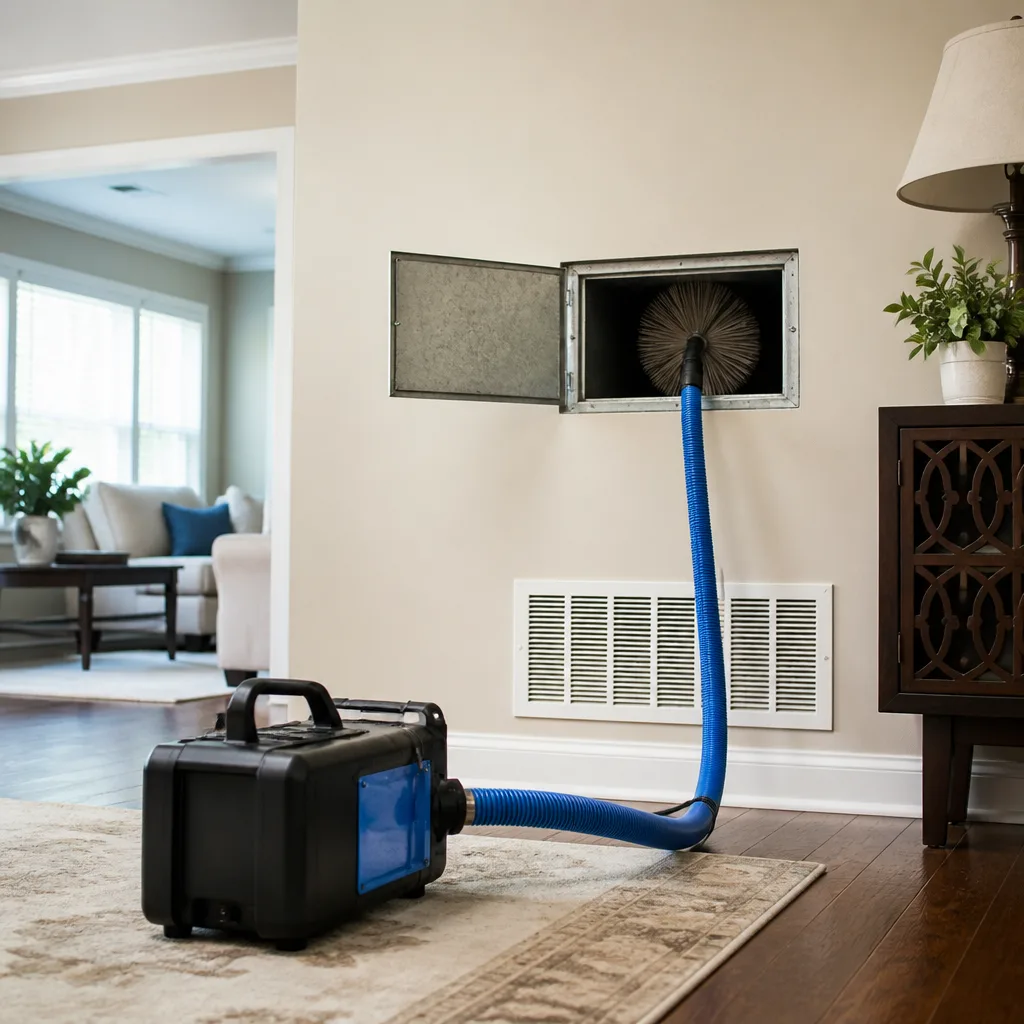 Sanitizing & deodorizing
Whole-system duct and dryer vent check with before-and-after photos - you see exactly what came out of your vents
That "$99 whole-house special" is a bait ad - the real number appears once they are in your hallway, or the "clean" is a shop-vac at the register. We photograph the inside of your ducts before and after instead.
Choosing the Right Air Duct Cleaning Brand: A Buyer’s Guide for Davie
Here’s something that surprises most homeowners: there is no meaningful regulatory standard that requires a duct cleaning company to use a specific class of equipment. Two companies can advertise the same flat price, show up in the same kind of van, and still be doing completely different work inside your walls. One might run a commercial-grade Rotobrush negative-air system. The other might improvise with a shop vac and a length of hose. Nothing in the law stops either of them from calling it “air duct cleaning.”
This guide is written to close that gap for you. We’ll walk through what commercial-grade equipment actually is, how to tell a specialist from a generalist, what NADCA membership does and doesn’t guarantee, and the exact questions to ask before you book. By the end, you’ll know how to evaluate any duct cleaning company in Davie, including us, on the same technical footing.
Quick Answer
The right air duct cleaning brand in Davie is the one that owns commercial-grade equipment (Rotobrush, Nikro, or Abatement Technologies are the standard names), can repair and seal ductwork in the same visit they clean it, and is willing to show you before-and-after photos of your own ducts. Price is a tiebreaker, not a starting point. And a company that charges a low coupon rate with a shop-vac setup is not a bargain; it’s a different service entirely.
Styles & brands we work with
- Whole-home duct cleaning
- Dryer vent cleaning
- Camera inspection
- Sanitizing & deodorizing
Table of Contents
- What separates commercial-grade duct cleaning equipment from consumer tools
- NADCA membership: what it filters and what it doesn’t
- Local specialist vs. national franchise in Davie: the trade-offs
- Why cleaning and repair in the same visit changes the job
- Questions to ask about equipment before you book
- How a professional duct cleaning visit should actually go
- Why Davie homes present specific duct challenges
- Common mistakes to avoid
What separates commercial-grade duct cleaning equipment from consumer tools
Commercial-grade duct cleaning equipment is defined by two capabilities: enough vacuum pressure to hold a duct system under continuous negative pressure, and agitation tools that dislodge contaminants from every surface inside the run. Consumer tools do neither. A shop vac creates negative pressure at the nozzle but loses it as soon as the hose lengthens. A drill-mounted brush spins, but it doesn’t pull dust out of the system; it moves it around.
The professional equipment brands you’ll encounter in this trade fall into a few categories:
- Negative-air machines and rotary brush systems (Rotobrush). These are the backbone of most residential duct work. The Rotobrush system combines a high-CFM vacuum with a rotating brush whip that travels the inside of the duct run, scrubbing and simultaneously capturing debris. The unit’s vacuum pulls against the duct system while the brush agitates.
- HEPA filtration units (Abatement Technologies). Abatement Technologies equipment is used during service to capture dislodged contaminants before they re-enter living spaces. These systems are the same class of air filtration used in commercial and industrial duct remediation, and their presence on a truck tells you the operator is thinking about containment, not just suction.
- Compressed-air and mechanical agitation tools (Nikro). Nikro builds the air whips, skipper balls, and compressed-air nozzles that push through larger trunk lines where a rotary brush won’t reach. They’re standard equipment in commercial duct cleaning, and the same tools work in residential systems with long, high-volume trunks.
What budget operators actually use is harder to pin down because most don’t advertise it. In our experience, the pattern is a modified shop vac paired with a drill-mounted brush. That setup can produce visible dust movement at the register, which is enough to satisfy a homeowner watching from the hallway, but it doesn’t scrub the interior surface of the duct and it doesn’t hold the system under sustained negative pressure. Dust that gets dislodged simply settles back into the return.
Davie’s climate matters here. South Florida’s humidity is present most of the year, and a duct system that’s been running heavily accumulates a mix of dust, pollen, and organic particulate that binds to surfaces rather than sitting loose. A shop vac will lift the loose material. A rotary brush and sustained negative air will remove the bound layer. That difference shows up in the air quality of your home within a few days.
NADCA membership: what it filters and what it doesn’t
NADCA (the National Air Duct Cleaners Association) membership is the single most useful credibility filter available to a homeowner, and it’s worth understanding at two levels. The association publishes a formal assessment, cleaning, and restoration standard for HVAC systems (ACR, the Assessment, Cleaning, and Restoration standard). A member company has agreed to work to that standard. That’s a meaningful baseline.
What NADCA membership generally requires:
- A commitment to follow the ACR standard for cleaning procedures.
- Access to training and certification for at least one staff member (ASCS, or Air Systems Cleaning Specialist).
- Adherence to an industry code of ethics around pricing and sales conduct.
What NADCA membership does not guarantee:
- That every technician on the crew is certified. Membership is a company-level credential; individual technician certifications are separate.
- That the company owns commercial-grade equipment. Membership requires standard-aligned procedure, not a specific make or model.
- That the company is local. National franchises can hold membership.
So treat NADCA membership the way a hiring manager treats a degree: it filters out some candidates, and it doesn’t answer whether the person is right for the job. In Davie, we’ve seen the membership logo used well and used loosely. The proper use is to confirm that the company at least knows what standard-compliant cleaning looks like. The next step is to ask about their actual equipment.
If you’re evaluating a company and they can’t tell you what “source removal” means in the ACR standard, that’s a signal. It’s not disqualifying on its own, but it means you’re going to rely on the equipment questions in the next section of this guide.
Local specialist vs. national franchise in Davie: the trade-offs
The local vs. franchise decision is less about which is “better” in the abstract and more about which risks you’re comfortable accepting. Both models exist for a reason. What matters is knowing what each one trades.
Equipment ownership and accountability. A local specialist like us owns the equipment we run. When we quote a job, we know what we’re bringing and how long it will take. A national franchise typically operates through a regional office and, in many cases, subcontracts individual jobs to local crews who may or may not own the same equipment the franchise advertises. The franchise’s brand name is on the invoice, but the person in your home is often a subcontractor. That’s not automatically bad; it just means the quality question moves from the national brand to the local crew, and you don’t know who the local crew is until they show up.
Who answers the phone. With a local specialist, the person who answers is usually the person who can tell you whether your duct system needs a rotary brush or a compressed-air whip. With a national call center, the first conversation may be a scheduling agent working from a script. In our experience, that first conversation is when you learn more about the work than at any other point.
Trade-off to weigh. National franchises often advertise more heavily and may offer broader service packages on paper. Local specialists tend to have narrower scope and deeper expertise in that scope. A duct-and-vent specialist who only does ducts and vents is a different animal from a general HVAC company where duct cleaning is one service among many.
If you’re looking specifically for duct cleaning in Davie, the local specialist route usually wins on accountability. Franchise is a reasonable fallback if a local provider is unavailable and you can verify the subcontractor’s equipment directly.
Why cleaning and repair in the same visit changes the job
A cleaning-only operator finds damage and has to hand you off to a second contractor. That handoff is where most duct jobs go wrong. The cleaning crew notes a loose joint or a crushed section of flex duct, writes it on the invoice, and leaves. Then you call a separate HVAC repair company, they show up days or weeks later, and they can’t exactly match what the cleaning crew saw. The second contractor re-opens the system, dust re-enters the house, and you’ve paid twice for the same access.
A company that cleans and repairs under one roof avoids that loop. At Duct Cleaning Davie, air duct repair is a core service, not an upsell. The same team that discovers a broken connection during the cleaning is equipped to seal, reconnect, or replace that section before the system goes back together. In practical terms:
- One access, one invoice. The system is opened once, cleaned, repaired as needed, and resealed once.
- No re-contamination. Repairs happen while the system is already under negative air, so dislodged dust doesn’t find its way back into rooms.
- Continuous accountability. If a repair doesn’t hold, it’s the same company that did the cleaning, not a second contractor pointing at the first.
Repair also interacts with indoor air quality upgrades. If the cleaning team finds a return plenum with a deteriorated filter frame, that’s the moment to install or upgrade a Honeywell or Aprilaire filtration system while the system is already open. You can see air duct cleaning as the entry point, and IAQ upgrades and repair as the natural next step from the same visit.
Questions to ask about equipment before you book
These are the specific asks that reveal whether a company owns commercial-grade tools or is improvising. Ask them on the first call, before any appointment is scheduled. The answers are short; a company with real equipment answers quickly and specifically.
- “What negative-air machine will you bring?” A legitimate answer names a manufacturer or a model style. “Rotobrush” or “a HEPA negative-air unit” is a real answer. “Our truck” or “our equipment” is not.
- “Do you run HEPA filtration on the exhaust?” This separates operators who capture contaminants from operators who simply exhaust them back into the house. Abatement Technologies or equivalent HEPA filtration is what you’re listening for.
- “What do you use for trunk lines wider than 8 inches?” Rotary brushes reach most branch runs. High-volume trunks need compressed-air whips or specialized nozzles (Nikro makes the standard set). If the answer is “the same brush we use for everything,” you’ve learned something.
- “Can you repair duct damage you find, or will I need a second company?” The most useful answer is that the company does duct repair in-house. If they don’t, ask how they hand off to whoever does and who is accountable for the seam.
- “Will I get before-and-after photos of my own ducts, not stock photos?” This is the single most revealing question. Companies that can’t produce photos of your specific system cannot prove the work was done.
- “Is the price flat per system, or is it priced per vent?” Per-vent pricing creates an incentive to count vents high and scope low. A flat rate per system, agreed in a written estimate before work starts, removes that incentive.
- “Are you NADCA-affiliated?” Not a dealbreaker if the answer is no, but the follow-up is what matters: if they are, ask what standard they work to.
If you’re in a Davie neighborhood like Pine Island Ridge, Rolling Hills, or the areas near Nova Southeastern University where older duct systems are common, add one more question: “Will you scope the runs before cleaning so we know what condition they’re in?” Some older systems have flex duct that’s collapsed inside a chase, and no amount of cleaning fixes a duct that isn’t flowing to begin with.
How a professional duct cleaning visit should actually go
A standard professional visit has a predictable shape. Knowing it helps you spot a company cutting corners, and it helps you plan your day. A typical residential job, in a single-family home, runs two to four hours depending on the number of systems and the condition of the ductwork.
- Walkthrough and system assessment. The technician identifies each air handler, counts the returns and supplies, and notes any visible damage (loose connections, crushed flex, gaps at the plenum). This is when we ask about musty odors, uneven airflow, and recent renovations.
- Containment setup. Negative-air equipment is connected at the air handler. HEPA filtration is placed on the exhaust side to capture dislodged particulate before it enters living space. This is the step that separates commercial-grade work from consumer-grade work.
- Source-removal cleaning. Rotary brush tools run each branch and trunk. Compressed-air whips or high-volume nozzles handle the larger trunks. Registers and grilles come off for cleaning or are cleaned in place depending on style.
- Inspection and repair. If damage was found in step one, it’s repaired now while the system is still open. Seams are sealed, connections re-secured, damaged flex replaced as needed.
- Rinse and photo record. Before-and-after photos of representative runs and of the air handler. You should receive these before payment or with the invoice.
- Reconnect and airflow test. Registers back on, system buttoned up, airflow confirmed at each supply. Any IAQ upgrades (a Honeywell or Aprilaire filter cabinet, for example) are installed during this step if you chose them.
The step to watch for is number five. A company that skips the before-and-after record and tells you to trust that they did the work is asking for the trust their own process hasn’t earned. The photo record is your proof, not a favor.
Why Davie homes present specific duct challenges
Davie sits in South Florida, which shapes duct conditions in ways that generic nationwide guides miss. The climate keeps HVAC systems running for most of the year, which means duct run time is high, filter loading is faster, and the accumulation of dust and organic particulate builds up sooner than it would in a cooler part of the country. Homes in Davie that run their air conditioning nine or ten months a year don’t get the seasonal downtime that slows this buildup elsewhere.
Housing stock here is a mixed bag. Older single-family homes in and around neighborhoods like Pine Island Ridge and Orange Tree often have original ductwork that’s seen multiple HVAC replacements. Those replacements sometimes leave legacy flex runs mismatched to newer, higher-static-pressure air handlers. The duct looks fine, but the airflow is restricted. Cleaning helps, and repair or rebalancing of those runs is often what actually fixes the problem.
New construction and recent renovations are their own category. Duct systems that were installed behind drywall without proper sealing can accumulate dust in cavities you can’t see. During service, we look for that pattern specifically. The Davie area also has plenty of light-commercial properties (small offices, restaurants, medical suites) where commercial-grade equipment and HEPA containment aren’t optional; they’re the baseline for keeping a business operating while ducts are cleaned.
For homeowners with musty odors that persist after cleaning, the culprits are often a missed return trunk or a poorly sealed plenum drawing in air from a crawlspace or garage. Those are duct repair issues, not cleaning issues, and a cleaning-only operator can’t reach them. Scheduling dryer vent cleaning at the same time as duct service is a reasonable move if you’re already booking a visit; the dryer vent is a separate fire-safety concern and cleans independently, but the appointment slot is shared.
Common Mistakes to Avoid
- Choosing on price alone. A low advertised rate usually corresponds to a shop-vac setup and per-vent billing that climbs once the technician is in the house. Ask what the flat per-system price is and get it in writing.
- Believing “clean air” without photo proof. Any company can say they cleaned every duct. Before-and-after photos of your own system are the only verifiable proof. Ask for them upfront.
- Hiring a general HVAC contractor for a duct job. A great HVAC repair technician isn’t automatically trained on duct remediation equipment, and vice versa. Davie has plenty of general contractors who list duct cleaning as a side service; the acronym-heavy credentials usually live with specialists.
- Skipping the repair conversation. If your ducts need repair, cleaning them first is a short-term fix. Ask about repair capability before you book, or you’ll be scheduling a second visit.
- Ignoring the dryer vent. This is a fire-safety service, not a maintenance afterthought. If you’re booking duct cleaning in Davie, ask whether the same team can inspect and clean the dryer vent at the same time.
- Assuming NADCA membership is a full guarantee. It’s a useful filter. It doesn’t tell you what equipment arrives, who’s driving it, or whether the crew is in-house or subcontracted. Use it as a starting point, not a substitute for the equipment questions above.
- Overlooking IAQ upgrades while the system is open. If a filter cabinet is accessible, that’s the moment to install a Honeywell or Aprilaire system. Doing it later means reopening the plenum and paying for access again.
See the difference
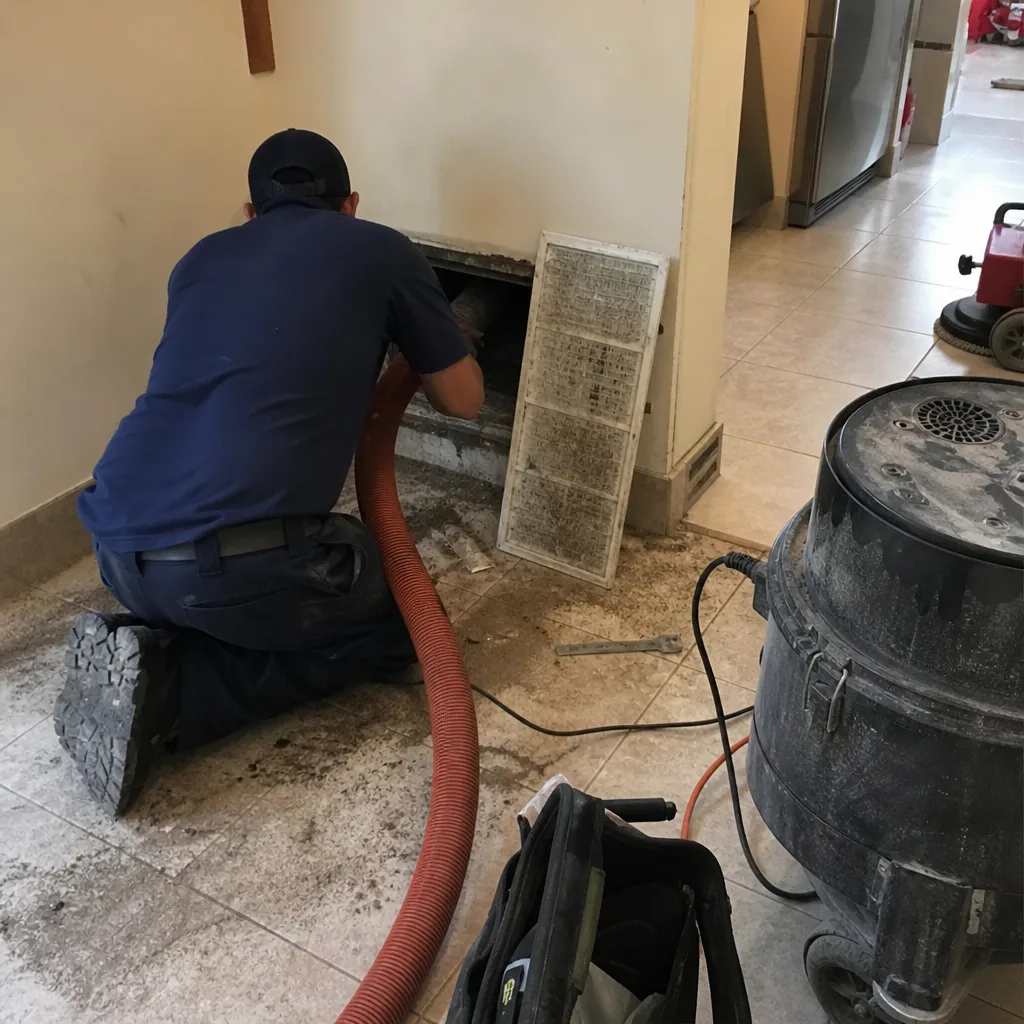 Before
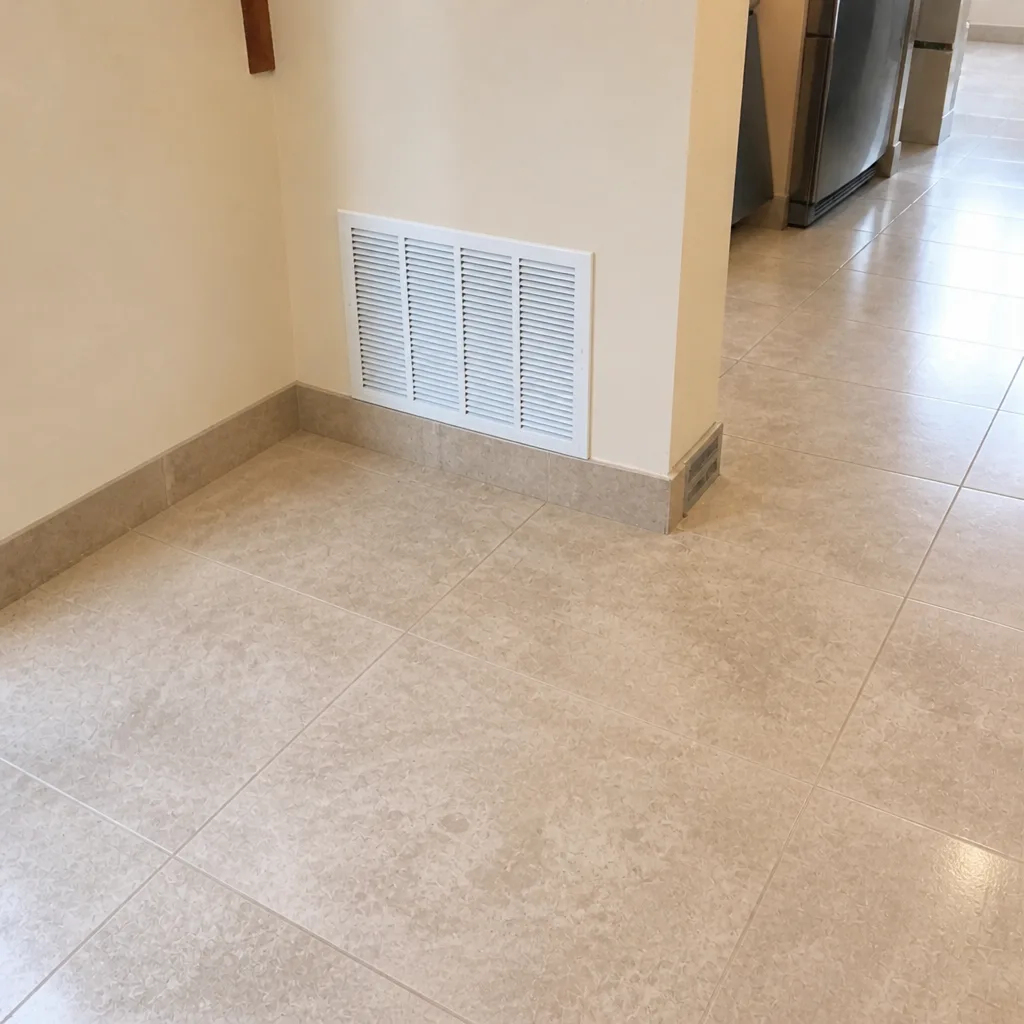 After
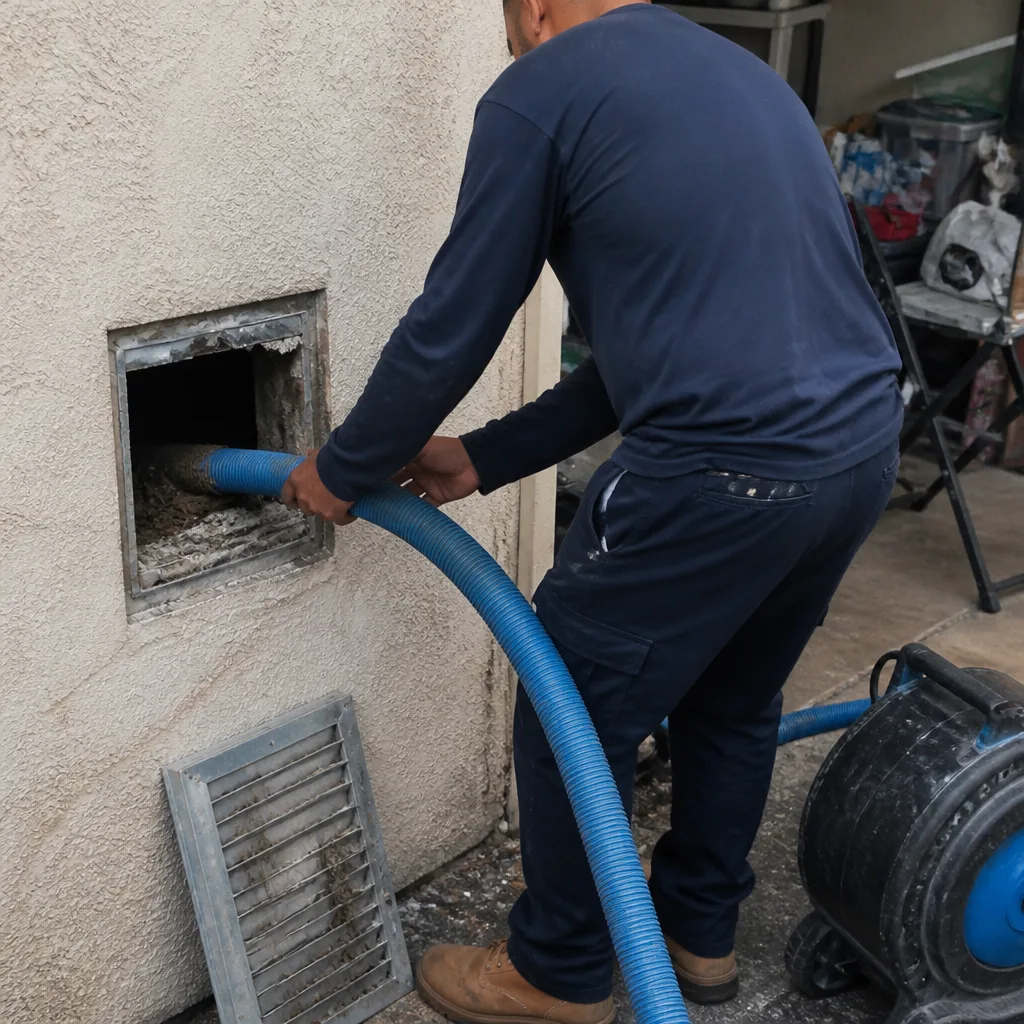 Before
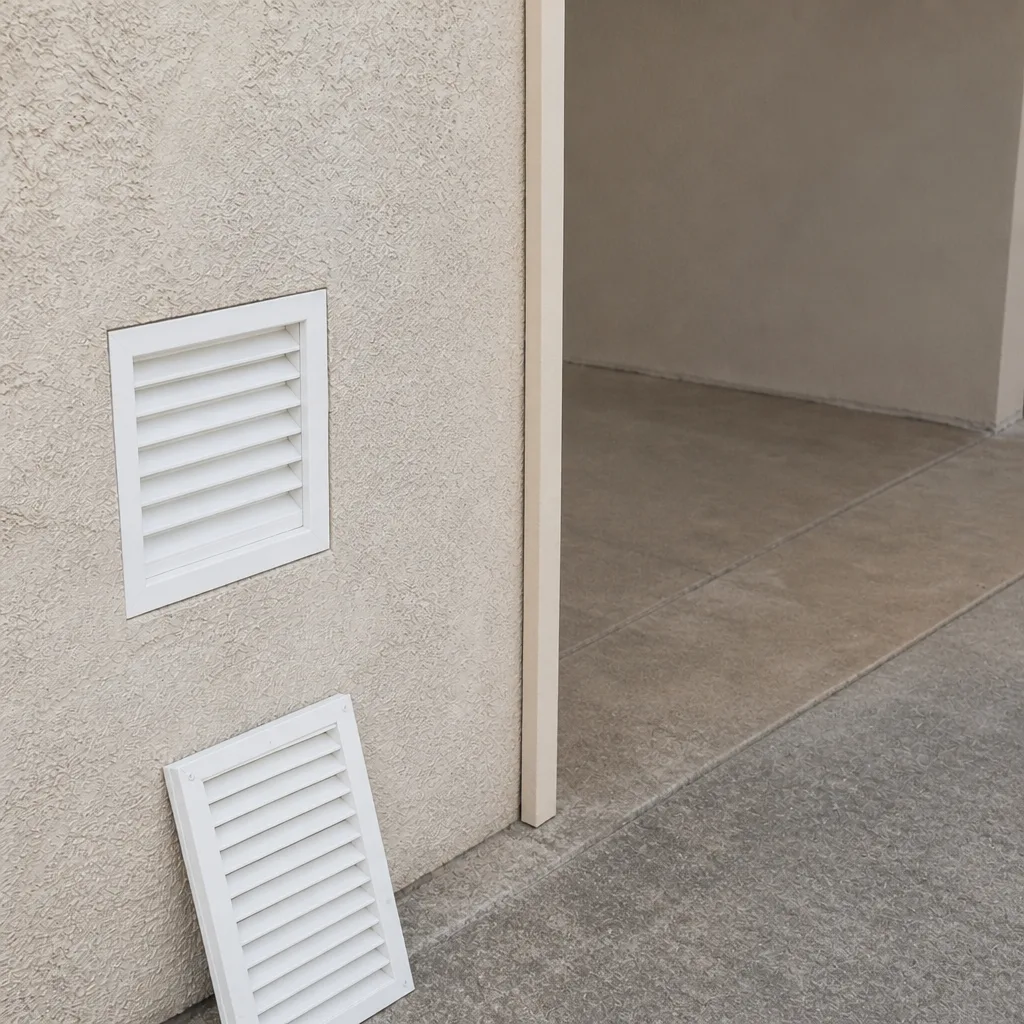 After
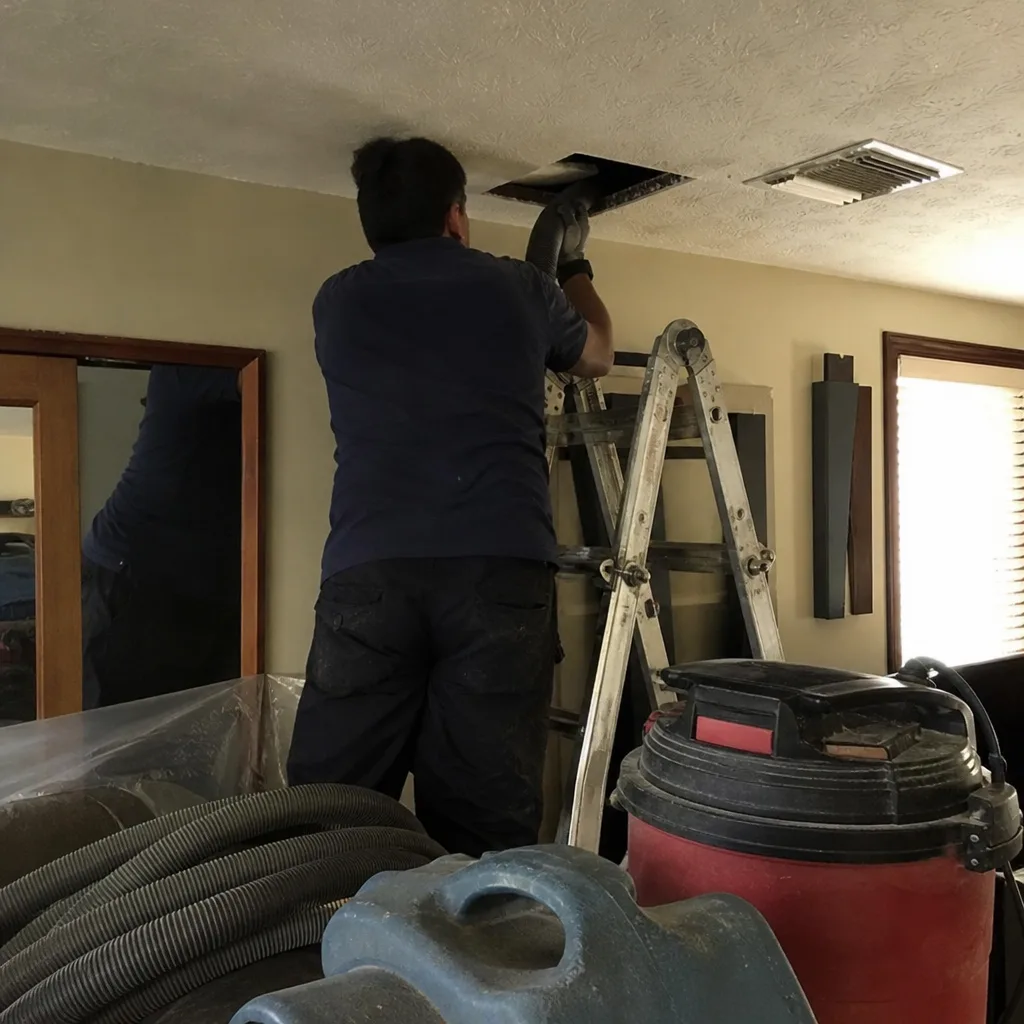 Before
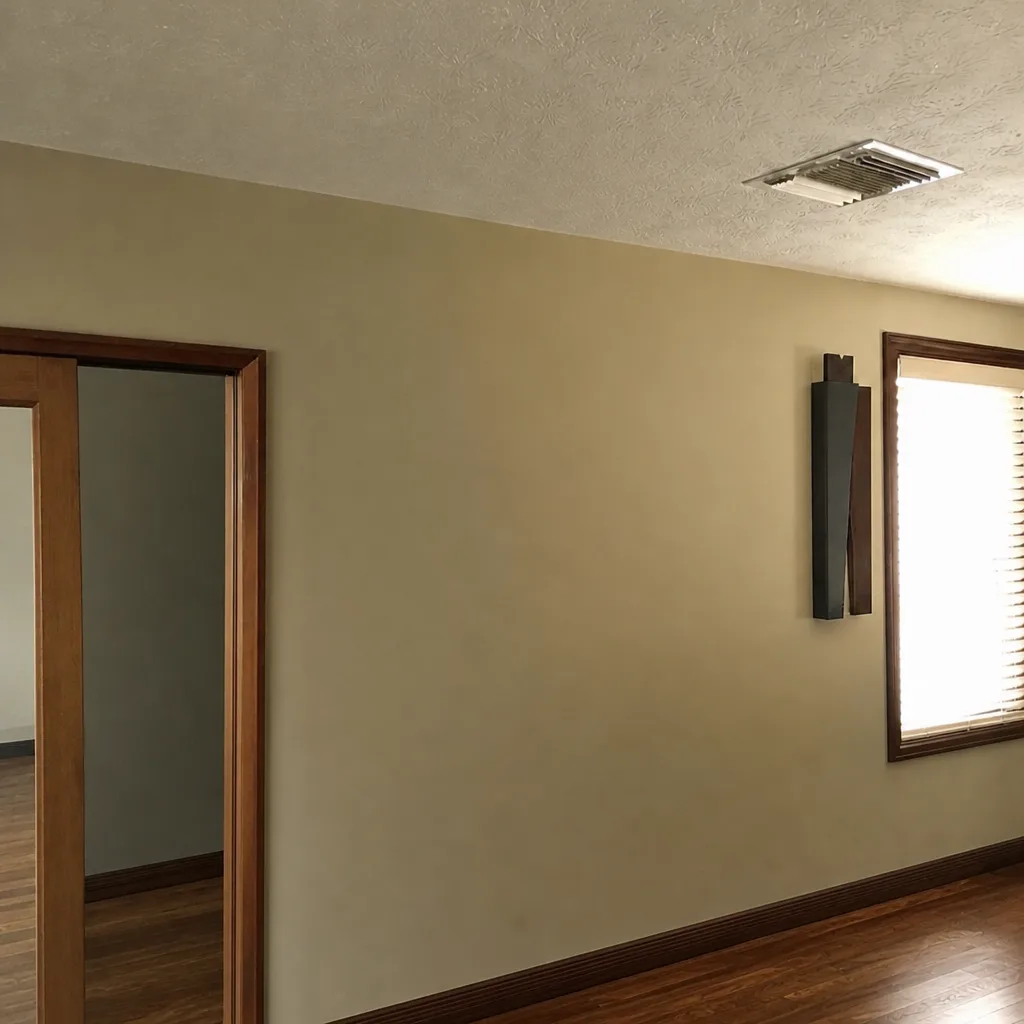 After
When to Call a Professional
Some signs point clearly to a professional visit rather than a DIY attempt. Visible dust plumes at a register within a day or two of dusting, persistent musty odors that don’t fade after HVAC filter changes, uneven airflow between rooms, and a recent renovation or HVAC replacement all justify a look at the duct system. So does a dryer that takes more than one cycle to dry a normal load, or a visible accumulation of lint around the outdoor vent flap; those are fire-safety indicators, not airflow annoyances.
If you’re in Davie and you’ve noticed any of those, don’t guess at the scope. Duct Cleaning Davie offers free estimates in Davie – call (833) 772-2601. We answer 24/7. Fast dispatch from 7am to 7pm, Sunday through Friday, closed Saturday. The written estimate sets the final price, and the price is per system, agreed before any work starts.
Frequently Asked Questions
Most residential duct cleaning in Davie falls into a few honest whole-system ranges depending on the size of the home and the number of air handlers. The final number depends on how many systems your house has, how many returns and supplies serve each one, and whether any repair work is included. We give a written estimate before we book, and the price is set per system, not per vent, so it doesn’t move once the technician is on site. Call (833) 772-2601 for an exact quote – estimates are free.
Cheap quotes are usually cheaper for a reason: lighter equipment, less time on site, or a per-vent price that climbs once the technician is in the house. A company running a shop vac and a drill brush can charge $99 and still make money; a company running a Rotobrush negative-air system and HEPA filtration cannot. The right question isn’t “why is your price higher?” It’s “what does the cheaper company bring to the house, and what does the cheaper company remove?” We’d rather tell you honestly what a complete system clean involves. Call (833) 772-2601 for a straight answer.
Before-and-after photos of your own ducts, taken during the visit, are the only verifiable proof. Stock photos and a verbal assurance are not. We provide photos of representative runs and of the air handler after every cleaning so you can see the difference for yourself. If a company can’t show you your own system, keep looking. Call (833) 772-2601 to schedule a visit with the photo record included.
Most homes in Davie benefit from a professional cleaning every three to five years, and homes with pets, recent renovations, or long HVAC run times tend to land on the shorter end of that range. A single-system home with good filtration and no renovations can stretch to five. A home with multiple systems and a household member with allergies usually wants to stay closer to three. The honest answer is that the interval depends on your filter habits and dust loads, not a blanket calendar. Call (833) 772-2601 and we’ll walk through your specific setup.
Yes – cleaning and repair are both core services, and both happen in the same visit. If we find a loose connection, a crushed section of flex duct, or a seam that’s pulling in basement or attic air during the cleaning, we can repair and seal it while the system is still open. That avoids the second appointment and the re-contamination that comes with reopening a duct system. Call (833) 772-2601 to discuss your system.
No – dryer vent cleaning is a separate, safety-focused service, and we treat it as its own job because the fire risk is its own issue. Lint accumulation in a dryer vent is a genuine fire hazard, not just an airflow inconvenience, and it deserves its own inspection. Many customers in Davie have us clean the dryer vent on the same visit as duct cleaning, but it’s priced and scheduled as a discrete service, not an upsell. If you’re in Davie and want both handled in one appointment, call (833) 772-2601.
A negative-air machine with HEPA filtration on the exhaust, rotary brush tools for branch runs, and compressed-air or specialized nozzles for the larger trunks. In our case that’s Rotobrush and Nikro equipment, with Abatement Technologies filtration used during service to capture dislodged contaminants. If a company can’t tell you the make or configuration of their machine on the phone, ask why not. Call (833) 772-2601 to hear exactly what we bring.
The Bottom Line
The air duct cleaning “brand” you should be evaluating isn’t the logo on the side of the truck. It’s the equipment manufacturer behind the negative-air machine, the training and standard the crew works to, and whether the company that finds a duct problem can also fix it. Rotobrush, Nikro, and Abatement Technologies are the names that signal commercial-grade work; NADCA membership is a useful but incomplete filter; local specialists and national franchises trade different risks. The questions in this guide work on any company, including us. Ask them, compare answers, and pick the one that gives you a photo record and a flat per-system price in writing.
If you’re ready for a straight conversation about your home in Davie, call Duct Cleaning Davie at (833) 772-2601. We answer 24/7. Fast dispatch from 7am to 7pm, Sunday through Friday, closed Saturday. Estimates are free, the price is set per job by the written estimate, and our technicians have up to 8 years of experience. We’ll tell you honestly what your ducts need, and what they don’t.
Written by the team at Duct Cleaning Davie.